
Board and Investor Materials: Translating Technology Into Confidence
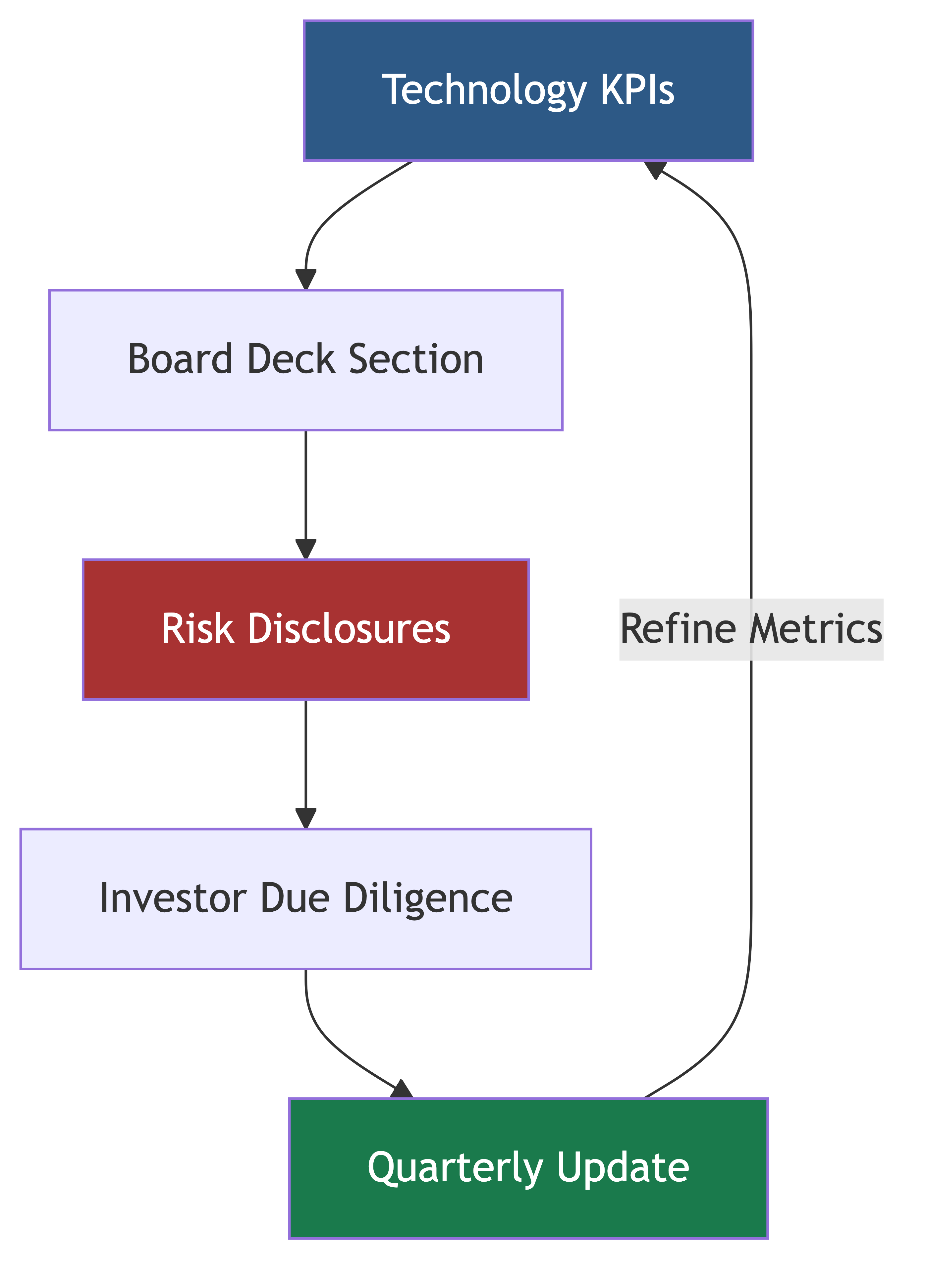
Here's a truth that most CTOs learn the hard way: your board doesn't care about your technology. They care about what your technology enables. They care about growth, risk, and competitive advantage. If you walk into a board meeting and talk about microservices migration, you've already lost the room.
Your job in board and investor contexts isn't to educate people about technology. It's to build confidence that technology is a well-managed asset that drives business outcomes. That's a fundamentally different skill than building great software, and it's one that many technically brilliant CTOs struggle with.
I've sat on both sides of the boardroom table — as a CTO presenting and as a board member listening. Let me share what actually works.
What Boards Actually Want to Hear From a CTO
Let me save you years of trial and error. Board members want answers to a small number of questions:
-
Is technology enabling or constraining our growth? Can the platform handle 2x, 5x, 10x the current load? Are we shipping features fast enough to win in the market?
-
What are the technology risks, and are they managed? Could we have a major outage? Are we vulnerable to security breaches? Is there key-person risk? Technical debt that could slow us down?
-
Are we spending technology dollars wisely? Is our engineering team productive? How does our spend compare to benchmarks? Are we investing in the right areas?
-
What's the technology strategy, and does it support the business strategy? Where are we heading architecturally? How does technology create competitive advantage?
That's it. Four questions. Every slide you create, every update you give, should map back to one of these four themes.
Technical Sections for Board Decks
The Quarterly Technology Update
A good quarterly board update covers these sections in roughly this order:
1. Technology Highlights (1-2 slides)
Lead with wins. What shipped? What's the business impact? Use concrete numbers:
- "Launched new checkout flow — conversion rate improved 12%"
- "Reduced page load time by 40% — bounce rate dropped 8%"
- "Completed SOC 2 Type II — unlocked enterprise sales pipeline"
Don't list every feature. Pick the 3-5 most impactful ones. Board members have limited attention — use it wisely.
2. Engineering Velocity and Health (1 slide)
Show that the engineering organization is healthy and productive. Use metrics the board can understand:
- Deployment frequency (are we shipping faster or slower?)
- Cycle time (how long from idea to production?)
- Team growth and retention (are we keeping good people?)
- Quality metrics (incidents, customer-reported bugs)
Trend these over time. The trend matters more than the absolute number. If cycle time is improving quarter over quarter, that's a story. If it's degrading, you need to explain why and what you're doing about it.
3. Platform Scalability and Reliability (1 slide)
Boards worry about whether the platform can handle growth. Address this directly:
- Uptime for the quarter (99.95%? 99.99%?)
- Major incidents (how many, what happened, what you did about it)
- Scalability headroom (how much growth can you handle before needing major investment?)
Be honest about incidents. Boards respect transparency. They lose confidence when they're surprised.
4. Technology Risks (1 slide)
Every board update should include a risk section. Cover:
- Known risks and their severity
- Mitigation plans and progress
- New risks identified this quarter
Use a simple red/yellow/green framework. Boards understand traffic lights. Don't have everything be green — that signals you're not being honest. A few yellows show you're paying attention.
5. Technology Investment and Roadmap (1-2 slides)
Show how you're allocating engineering effort:
- New features vs. platform investment vs. technical debt
- Key initiatives for next quarter
- How the technology roadmap aligns with business priorities
Use a simple allocation chart: "60% new features, 25% platform investment, 15% technical debt reduction." This gives the board a clear picture of where engineering effort is going.
Design Principles for Board Slides
- No jargon: If you use a technical term, define it in business language. "We migrated to Kubernetes" means nothing. "We moved to infrastructure that auto-scales, reducing our hosting costs by 30% and eliminating manual scaling work" tells a story.
- Numbers, not narratives: "Performance improved significantly" is weak. "API response time decreased from 800ms to 200ms, improving user experience scores by 15 points" is strong.
- Trends over snapshots: A single data point is noise. A trend is a signal. Always show quarter-over-quarter or year-over-year comparisons.
- Business impact first, technology second: Lead with the outcome, then explain the technology that enabled it. "Revenue per user increased 20% due to our new recommendation engine" not "We built a recommendation engine using collaborative filtering."
- Visual, not textual: Use charts, graphs, and diagrams. A well-designed chart communicates more than a paragraph of text and is absorbed in seconds.
Investor Due Diligence Preparation
At some point — a fundraise, an acquisition, or an IPO — investors will want to dig deep into your technology. This is technology due diligence, and it can make or break a deal.
What Investors Evaluate
Technical due diligence typically covers:
- Architecture: Is the system well-designed? Can it scale? Is it maintainable?
- Code quality: Is the codebase clean, well-tested, and well-documented?
- Security: Are there vulnerabilities? Is data protected? Are there compliance gaps?
- Team: Is the team strong? Is there key-person risk? Can the team execute the roadmap?
- Technical debt: How much exists? What's the plan to address it?
- Intellectual property: Is the IP properly protected? Are there open-source license issues?
- Infrastructure: Is the infrastructure reliable, scalable, and cost-efficient?
- Data assets: What data do you have? How is it managed? Is it a competitive advantage?
Preparing Your Due Diligence Package
Don't wait until diligence starts to prepare. Have these ready in advance:
Architecture Documentation
- High-level system architecture diagram
- Data flow diagrams
- Key technology decisions and their rationale
- Scalability analysis
Engineering Metrics
- Deployment frequency and trend
- Test coverage by service
- Incident history and response times
- Team velocity trends
Security and Compliance
- Security audit results
- Penetration test reports
- Compliance certifications
- Data protection measures
Team Overview
- Org chart with tenure
- Key technical leaders and their backgrounds
- Hiring plan and pipeline
- Retention metrics
Technical Debt Assessment
- Categorized debt inventory
- Estimated remediation costs
- Prioritized remediation roadmap
IP and Licensing
- Patent portfolio (if applicable)
- Open-source dependency audit
- License compliance verification
The Due Diligence Conversation
When investors bring in technical evaluators, here's how to handle it:
- Be prepared but not rehearsed: Have your materials ready, but let the conversation be natural. Overly scripted responses raise suspicion.
- Be honest about weaknesses: Every company has technical debt and known issues. Acknowledging them and showing your remediation plan builds more confidence than pretending they don't exist.
- Show your decision-making process: Investors care as much about how you make decisions as the decisions themselves. Walk them through a recent significant technical decision — the options you considered, the trade-offs you evaluated, and why you chose the path you did.
- Demonstrate self-awareness: The scariest CTO for an investor is one who doesn't know what they don't know. Show that you have clear-eyed visibility into your strengths and weaknesses.
Technology Risk Disclosures
Being upfront about technology risk is counterintuitive but powerful. Boards and investors respect leaders who proactively identify and manage risk. They lose confidence in leaders who pretend risk doesn't exist.
Categories of Technology Risk
Operational Risk
- Single points of failure in architecture
- Key-person dependencies
- Vendor concentration risk (e.g., heavy reliance on a single cloud provider)
Security Risk
- Known vulnerability exposure
- Attack surface assessment
- Data breach potential and impact
Scalability Risk
- Known bottlenecks
- Growth scenarios that exceed current capacity
- Time and cost to address scalability constraints
Technical Debt Risk
- Areas where debt constrains development speed
- Debt that creates reliability or security exposure
- Cost of continued deferral vs. remediation
Talent Risk
- Key-person dependencies
- Hiring challenges in critical areas
- Retention risks
How to Present Risk Effectively
Don't just list risks. For each risk, present:
- The risk: What could go wrong?
- The likelihood: How likely is it?
- The impact: What happens if it occurs?
- The mitigation: What are you doing about it?
- The status: Is mitigation on track?
This framework — risk, likelihood, impact, mitigation, status — gives the board everything they need to assess whether technology risk is well-managed.
Technology Confidence Drives Valuation
This is the business case for everything in this chapter. Technology confidence directly impacts company valuation.
How Technology Affects Valuation
Investors apply a "technology premium" or "technology discount" based on their assessment of your technology:
Premium factors (increase valuation):
- Proprietary technology that creates defensible competitive advantage
- Scalable architecture that can support 10x growth without proportional cost increase
- Strong engineering team with low turnover
- Clean, well-tested codebase
- Robust security and compliance posture
- Data assets that improve with scale
Discount factors (decrease valuation):
- Significant unaddressed technical debt
- Architecture that can't scale without rewrite
- Key-person risk (one person who understands critical systems)
- Security vulnerabilities or compliance gaps
- Poor engineering metrics (slow deployment, high incident rate)
- Open-source license issues
I've seen technology due diligence swing valuations by 20-30%. A company with a 70M because of technology concerns, or $120M because the technology is genuinely impressive. The CTO's preparation directly impacts this outcome.
Building Long-Term Technology Confidence
Technology confidence isn't built in a board meeting. It's built through consistent execution over time:
- Deliver on commitments: When you tell the board you'll hit a milestone, hit it. Reliability builds trust.
- Communicate proactively: Don't let the board be surprised by bad news. If there's a problem, tell them before they find out another way.
- Show continuous improvement: Quarter-over-quarter improvement in metrics signals a well-managed technology organization.
- Demonstrate strategic thinking: Show that you're not just executing today's plan but thinking about tomorrow's challenges.
Presenting Technology Strategy to Non-Technical Audiences
This is an art form. Here are the principles that work:
Use Analogies
Technical concepts map to business concepts more often than you'd think:
- "Technical debt is like deferred maintenance on a building. You can skip it for a while, but eventually the roof leaks."
- "Our API platform is like a highway system. Each partner integration is an on-ramp. The more on-ramps, the more traffic, the more value."
- "Microservices let us scale teams independently, like having specialized departments that can each grow at their own pace."
Focus on Capabilities, Not Implementation
The board doesn't care that you use PostgreSQL vs. MongoDB. They care that your data infrastructure can handle real-time analytics at scale. Frame everything in terms of capabilities:
- Not "We implemented a message queue" but "We can now process events in real time, enabling instant fraud detection"
- Not "We containerized our services" but "We can now deploy new features in minutes instead of days"
- Not "We built a data lake" but "We can now analyze customer behavior across all touchpoints, enabling personalized experiences"
Tell a Story
The best board presentations tell a story with a beginning, middle, and end:
- Beginning: Here's where we were (the problem or opportunity)
- Middle: Here's what we did (the initiative)
- End: Here's the result (the business impact)
This narrative structure is familiar to board members and makes complex technical work feel coherent and purposeful.
Know Your Audience
Different board members have different backgrounds. The former operator will appreciate operational metrics. The financial expert will want to see ROI analysis. The domain expert will want to understand competitive positioning. Tailor your emphasis accordingly, and be prepared to go deeper on any topic.
Quarterly Board Updates: A Template
Here's a template I've refined over years of board meetings:
Slide 1: Executive Summary
- 3-4 bullet points: biggest wins, biggest risks, key decisions needed
- This slide should stand alone — if a board member reads nothing else, they should understand the state of technology
Slide 2: What We Shipped
- Top 3-5 deliverables with business impact
- Visual: product screenshots or metrics charts
Slide 3: Engineering Health
- Velocity trends (cycle time, deployment frequency)
- Quality trends (incidents, bug rates)
- Team metrics (headcount, retention, hiring pipeline)
Slide 4: Platform Status
- Reliability (uptime, incident summary)
- Scalability (current capacity vs. projected need)
- Security (audit results, vulnerability trends)
Slide 5: Risk Register
- Updated risk assessment with status changes
- New risks identified
- Risks mitigated or closed
Slide 6: Investment Allocation
- How engineering effort is distributed
- Key initiatives for next quarter
- Resource requests (if any)
Appendix
- Detailed metrics for those who want to dig deeper
- Technical deep-dives on specific topics
- Reference materials
Keep the main deck to 6 slides. Put everything else in the appendix. Board meetings run long when the deck is long.
Real-World Examples
The CTO Who Over-Explained
I watched a CTO spend 20 minutes explaining the technical details of a database migration. The board's eyes glazed over after minute three. The CEO had to intervene and ask, "What does this mean for our ability to scale?" The CTO could have led with: "We completed a database migration that increases our capacity from 10,000 to 100,000 concurrent users at 30% lower cost." One sentence. The board would have nodded and moved on.
Due Diligence That Made the Deal
A startup going through acquisition due diligence had spent six months preparing their technical documentation. When the acquirer's technical team arrived, the CTO walked them through a clean architecture document, comprehensive test coverage reports, a categorized technical debt inventory with remediation estimates, and clear engineering metrics. The acquirer's CTO later said it was the best-prepared technical due diligence they'd ever seen. The acquisition closed at the top end of the valuation range — a 15% premium attributed partly to technology confidence.
The Risk Disclosure That Built Trust
A CTO proactively told the board about a significant scalability bottleneck in their payment processing system. She presented the risk, the potential impact, the remediation plan, and the timeline. Two board members later told the CEO they were impressed by her transparency and strategic thinking. When the remediation required an additional $500K in engineering investment, the board approved it without hesitation because they understood the risk and trusted the plan.
The IPO Readiness Gap
A company six months from IPO discovered that their CTO had never presented technology risk to the board. The S-1 required technology risk disclosures, and the board was uncomfortable approving disclosures they'd never discussed. It took three months of accelerated board briefings to get everyone aligned. If the CTO had been presenting risk regularly, the IPO preparation would have been seamless.
Common Mistakes
1. Speaking in Technical Language
The most common mistake. Your board includes investors, operators, and domain experts — not engineers. Every technical term needs a business translation. Practice your presentation with someone non-technical. If they can't follow it, simplify.
2. Avoiding Bad News
Boards find out about problems eventually. If they hear it from you first, you look responsible and proactive. If they hear it from somewhere else, you look either incompetent or dishonest. Neither is good.
3. Requesting Resources Without Business Justification
"We need to hire five more engineers" is a request. "We need five more engineers to reduce deployment cycle time from two weeks to two days, enabling us to respond to market changes 7x faster" is a business case. Always present the business case.
4. Presenting Too Much Detail
A 30-slide technology update signals that you can't prioritize. Six slides that hit the key points signal executive-level thinking. The appendix exists for a reason — use it.
5. Not Preparing for Questions
Board members will ask questions. Anticipate the likely ones and have data ready. "What's our biggest technology risk?" "How do we compare to competitors technically?" "What happens if our lead architect leaves?" Having thoughtful answers ready builds enormous confidence.
6. Treating Board Meetings as Reporting
Board meetings aren't just status reports. They're opportunities to build relationships, get strategic input, and align on direction. Engage the board in discussion. Ask for their perspective. Make it a conversation, not a presentation.
7. Inconsistent Metrics
If you report different metrics every quarter, the board can't track trends. Pick a consistent set of metrics and report them every quarter. Add new ones when needed, but don't drop old ones without explanation.
Business Value
Effective board and investor communication delivers concrete business value:
- Higher valuations: Companies with technology-confident boards receive higher valuations. I've seen 15-30% valuation differences attributed to technology perception during fundraising and M&A.
- Faster fundraising: When investors trust the technology story, due diligence goes faster and term sheets come sooner. A well-prepared CTO can shorten a fundraising process by weeks.
- Better board relationships: A board that understands and trusts the technology organization provides better strategic guidance and approves investments more readily.
- Smoother exits: Whether it's an IPO or acquisition, technology due diligence is a critical gate. Preparation prevents delays that can kill deals.
- Resource approval: When the board trusts your judgment, getting approval for engineering investments becomes dramatically easier. You spend less time justifying and more time executing.
- Risk mitigation: Regular risk disclosure creates accountability and ensures that technology risks are addressed before they become crises. A board that understands risks can help mitigate them through their networks and experience.
The CTO who communicates effectively with the board isn't just doing their corporate duty — they're directly impacting the company's ability to raise capital, close acquisitions, and grow strategically.
Summary
Board and investor communication is a skill that separates good CTOs from great ones. The technology doesn't speak for itself — you have to translate it into the language of business outcomes, managed risk, and strategic advantage.
Prepare obsessively. Communicate simply. Be honest about both strengths and weaknesses. Build confidence through consistent execution and transparent reporting.
The board meeting isn't where you prove you're technically brilliant. It's where you prove you're a business leader who happens to be an expert in technology. That distinction matters more than you think.
Common Pitfalls
-
Speaking in technical jargon to a non-technical audience. Mentioning microservices migration, Kubernetes, or database sharding without translating to business impact causes the board to disengage within minutes.
-
Avoiding bad news in board updates. Boards find out about problems eventually. Hearing it from you first makes you look responsible and proactive. Hearing it from another source makes you look either incompetent or dishonest.
-
Requesting resources without a business justification. "We need five more engineers" is a request. "We need five more engineers to reduce deployment cycle time from two weeks to two days, enabling 7x faster market response" is a business case.
-
Presenting too many slides. A 30-slide technology update signals inability to prioritize. Six focused slides that hit key points signal executive-level thinking. Put details in the appendix.
-
Reporting different metrics every quarter. If you change which metrics you track each quarter, the board cannot observe trends. Pick a consistent set and report them every time.
-
Treating board meetings as one-way status reports. Board meetings are opportunities to build relationships, get strategic input, and align on direction. Engage the board in discussion rather than presenting at them.
Key Takeaways
-
Board members want answers to four questions: is technology enabling or constraining growth, are technology risks managed, is technology spend efficient, and does the technology strategy support the business strategy.
-
The quarterly technology update should cover highlights (business impact of what shipped), engineering health (velocity and quality trends), platform status (reliability and scalability), risks (with mitigations), and investment allocation.
-
Lead with business impact, not technology details. "Reduced page load time by 40%, dropping bounce rate 8%" is compelling. "Migrated to a new CDN" is not.
-
Prepare a due diligence package (architecture docs, engineering metrics, security and compliance, team overview, technical debt assessment, IP and licensing) well before you need it for fundraising or M&A.
-
Proactive risk disclosure builds trust. For each risk, present what could go wrong, the likelihood, the impact, the mitigation, and the current status.
-
Technology confidence directly impacts company valuation. Due diligence findings can swing valuations by 20-30%, making CTO preparation for these conversations extremely high-leverage.
-
Build long-term board confidence through consistent execution on commitments, proactive communication, continuous metric improvement, and demonstration of strategic thinking.