
Prerequisites for the CTO Role
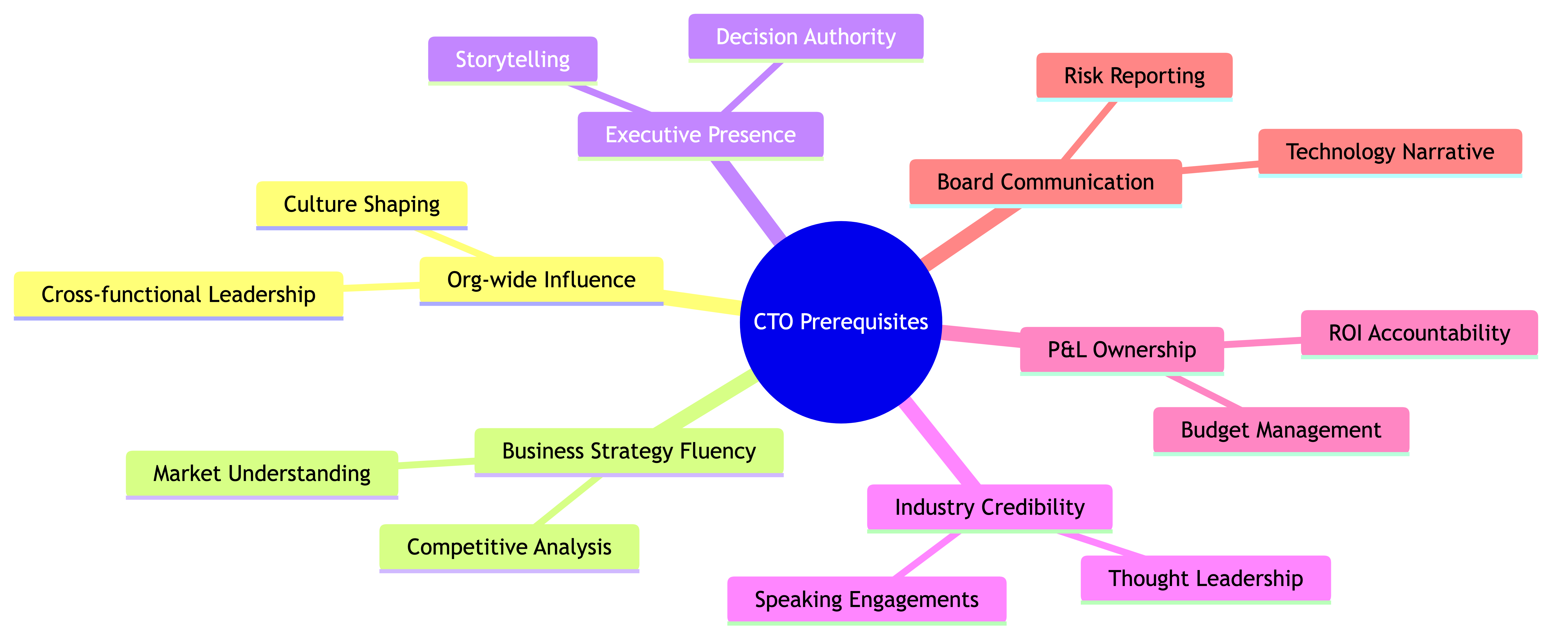
What This Section Covers
Before we dig into the CTO playbook, let's talk honestly about what it takes to operate at this level. The CTO role is fundamentally different from anything you've done before -- including Director and VP of Engineering. If you try to do it the same way you did your last job, you'll struggle.
I've watched brilliant Directors flame out in CTO seats because they didn't understand the shift. And I've watched less technically gifted leaders thrive because they understood what the role actually demands.
Let's break it down.
The CTO Role by Company Stage
The CTO role is not one-size-fits-all. What a CTO does day-to-day varies dramatically depending on the company's stage. Before diving into prerequisites, it helps to understand this spectrum.
| Stage | Focus | Team Size | Typical Split |
|---|---|---|---|
| Seed / Series A | Hands-on coding, architecture, hiring | 3-10 engineers | 60% building, 30% recruiting, 10% strategy |
| Series B-C | Technical strategy, some management, key design decisions | 10-50 engineers | 20% building, 40% management, 40% strategy |
| Growth | Pure strategy, executive leadership, cross-functional alignment | 50-200+ engineers | 0% building, 20% management, 80% strategy |
| Enterprise | Board-level leadership, technology as business strategy, M&A | 200+ engineers | 0% building, 10% management, 90% strategy |
At the earliest stages, the CTO is often the first or second engineer. They write code every day, make every architecture decision, and personally recruit most of the team. As the company scales through Series B and C, the role shifts toward setting technical direction while building out a leadership layer. By the growth stage, the CTO rarely touches code and instead operates as an executive -- aligning technology investments with business outcomes. At enterprise scale, the role becomes almost entirely strategic: board presentations, M&A due diligence, and shaping technology as a competitive moat.
This guide focuses primarily on the growth-stage and enterprise CTO, where the prerequisites below become critical. However, the underlying principles -- business fluency, strategic thinking, communication at scale -- apply at every stage. If you're an early-stage CTO, building these muscles now will serve you well as your company grows.
Org-Wide Technical Influence
As a Director, you influenced your department. As a VP, maybe a division. As CTO, you influence the entire organization -- and often the entire industry.
This isn't about telling people what to do. It's about shaping how an entire company thinks about technology. When you speak, product managers adjust their roadmaps. When you write a technical strategy document, it changes how teams make decisions for the next two years.
This level of influence requires a few things:
-
Deep credibility. People follow your technical direction because they trust your judgment, not because of your title. You've earned this through years of making good calls and, just as importantly, owning your bad ones.
-
Communication at scale. You can't influence a thousand engineers through one-on-ones. You need to communicate through documents, talks, architecture decision records, and the leaders who report to you.
-
Consistency. If you change your mind every quarter, nobody will follow your direction. Your technical principles need to be stable enough that people can build on them.
Here's a test: if you left your current company tomorrow, would your technical philosophy continue to guide decisions for the next year? If yes, you've achieved org-wide influence. If no, you're still operating through direct control rather than influence.
Business Strategy Fluency
This is the single biggest gap I see in CTO candidates. They can talk about technology all day, but put them in a room with the CFO and the head of sales, and they go quiet.
A CTO needs to be fluent in business strategy. Not an expert -- you're not replacing the CEO or the CFO. But fluent enough to:
- Read a P&L statement and understand what it means for technology investment
- Understand unit economics and how technology affects them
- Speak about market positioning and competitive dynamics
- Translate technology capabilities into revenue opportunities
- Understand how capital allocation works at the board level
This isn't optional. If you can't connect technology decisions to business outcomes in language that business leaders understand, you'll be sidelined in the conversations that matter most.
How to build this skill if you don't have it:
Start reading your company's financial reports. Ask the CFO to walk you through the P&L. Read business strategy books (not just technology books). Sit in on sales calls. Attend board meetings as an observer if you can. Take a finance course for non-finance executives.
The goal isn't to become a business person. The goal is to be a technology leader who can operate in a business context.
Executive Presence
Let me be blunt: executive presence matters at this level, and pretending it doesn't is naive.
Executive presence isn't about wearing expensive suits or having a deep voice. It's about:
-
Confidence without arrogance. You can walk into a room of board members and hold your own without either shrinking or posturing.
-
Composure under pressure. When there's a major outage or a security breach, you're the calm center. You communicate clearly, make decisions quickly, and don't panic.
-
Conciseness. Senior executives don't have patience for long-winded explanations. You need to make your point in two minutes, not twenty. If they want more detail, they'll ask.
-
Storytelling. The best CTOs I know are excellent storytellers. They can take a complex technical initiative and turn it into a narrative that a non-technical board member can follow and get excited about.
-
Disagreeing well. You'll disagree with the CEO, the CFO, and board members. How you disagree matters as much as what you disagree about. You need to challenge ideas without making people feel attacked.
If this sounds soft or fluffy, I promise you it's not. I've seen CTO candidates get passed over specifically because they couldn't communicate at this level. The technology skills were there. The presence wasn't.
Industry Credibility
A CTO represents the company's technical brand to the outside world. This means you need credibility beyond your own organization.
Industry credibility comes from:
-
Speaking at conferences. Not just attending -- speaking. Sharing your company's technical challenges and how you solved them.
-
Publishing. Blog posts, technical papers, open source contributions. Things that demonstrate you're a thought leader, not just a practitioner.
-
Network. You know other CTOs. You participate in CTO forums. You can pick up the phone and get advice from peers at other companies.
-
Track record. You've built things that the industry knows about. You've scaled systems, led transformations, or pioneered approaches that others have adopted.
This credibility matters for three reasons: it helps with recruiting (top engineers want to work for respected CTOs), it helps with partnerships (technology partners take you more seriously), and it helps with the board (they trust a CTO who's recognized in the industry).
If you don't have industry credibility yet, start building it now. It takes years, not months.
P&L Ownership
At the Director level, you owned a budget. At the VP level, you owned a bigger budget. As CTO, you own -- or heavily influence -- a significant portion of the company's P&L.
This means:
-
You're accountable for technology spend. Not just "did we stay under budget" but "did we get the right return on our technology investment?"
-
You make trade-off decisions with real financial consequences. Build vs. buy decisions that affect margins. Infrastructure choices that affect unit economics. Staffing models that affect operating leverage.
-
You're measured on business outcomes, not technical outcomes. Nobody at the board level cares about your uptime percentage in isolation. They care about it because downtime costs revenue.
If you've never owned a P&L, this is a significant adjustment. You need to start thinking about every technology decision in terms of its financial impact. Not just cost, but revenue, margin, and competitive positioning.
A practical exercise: Take your current technology budget and map every line item to a business outcome. If you can't draw a clear line from a technology investment to a business result, that's a problem -- either the investment is wrong, or you don't understand the connection well enough.
Board-Level Communication
Board communication is its own skill, and it's different from anything you've done before.
Board members are typically:
- Very smart but not technical
- Time-constrained (they have many companies to oversee)
- Focused on risk, growth, and return on investment
- Pattern-matching against their experience at other companies
What they need from you:
-
Technology risk assessment. What are the biggest technology risks to the business, and what are you doing about them?
-
Investment rationale. Why should the company invest X million in this technology initiative? What's the expected return?
-
Competitive context. How does our technology stack up against competitors? Where are we ahead, where are we behind?
-
Talent assessment. Do we have the right technology team? Where are the gaps?
What they don't need from you:
- Detailed architecture diagrams
- Technology buzzwords
- Long explanations of why something is technically hard
- Excuses about technical debt
The best board presentations I've seen from CTOs follow this structure:
- Here's what we said we'd do last quarter (2 minutes)
- Here's what we actually did and the business impact (5 minutes)
- Here's what we're planning next quarter and why (5 minutes)
- Here are the risks I'm watching (3 minutes)
- Here's what I need from the board (2 minutes)
That's it. Fifteen minutes. Then take questions.
The Shift from Director to CTO
This is the most misunderstood part of the CTO transition. Let me be very direct about what changes.
What you do less of:
-
Direct organizational management. You have VPs and Directors for that. If you're still doing skip-level one-on-ones with individual engineers, you're operating at the wrong altitude.
-
Sprint-level planning. You don't care about individual sprints anymore. You care about quarterly and annual outcomes.
-
Code review. Unless it's a foundational architecture decision, you shouldn't be reviewing pull requests.
-
Hiring individual contributors. Your Directors hire engineers. You hire Directors and VPs.
-
Incident management. You should be informed about major incidents, but you shouldn't be running the war room unless it's truly existential.
What you do more of:
-
Vision and strategy. Where should our technology be in three to five years? Why? How do we get there?
-
External engagement. Customers, partners, investors, industry peers. You're the external face of your technology organization.
-
Cross-functional leadership. You spend as much time with Product, Sales, Finance, and Legal as you do with Engineering.
-
M&A and investment evaluation. Should we acquire this company? Is their technology worth the price? Can we integrate it?
-
Board and executive communication. You're communicating up and out more than down and in.
-
Talent strategy at scale. Not individual hires, but the overall talent strategy. What capabilities do we need in two years that we don't have today?
The altitude metaphor:
Think of it as altitude. A Director operates at 10,000 feet -- close enough to see individual teams and projects. A VP operates at 25,000 feet -- seeing departments and programs. A CTO operates at 40,000 feet -- seeing the entire technology landscape, the competitive environment, and the horizon.
You can dip down to lower altitudes temporarily, but if you stay there, you're not doing your job.
How to Know You're Ready
Here are the signals that suggest you're ready for a CTO role:
-
You already think strategically. When you hear about a business challenge, your mind immediately goes to technology approaches. Not tactical solutions, but strategic ones.
-
Business leaders seek your input. The CEO, CFO, or head of product comes to you for technology perspective on business decisions, even when it's not strictly your responsibility.
-
You can let go. You're comfortable with your teams making technical decisions without you. You trust the systems and people you've put in place.
-
You have industry relationships. You know CTOs at other companies. You have a network you can learn from.
-
You can communicate at multiple altitudes. You can explain the same concept to an engineer, a product manager, a CEO, and a board member -- each in language they understand.
-
You're bored with operational management. If running the engineering org day-to-day still excites you, you probably want to be a VP of Engineering, not a CTO. The CTO role is about vision and strategy, and you need to genuinely enjoy that.
-
You understand the business. You can explain your company's business model, competitive position, and growth strategy as well as any business leader.
Common Gaps
Let me call out the gaps I see most frequently in CTO candidates. If you recognize yourself in any of these, that's actually good -- awareness is the first step.
Gap 1: Technical depth without business breadth
You're the smartest technologist in the room, but you can't explain why your technical decisions matter to the business. Fix this by spending time with business leaders and learning their language.
Gap 2: Operational excellence without strategic vision
You run a great engineering organization, but you can't articulate where technology should go in three years. Fix this by forcing yourself to think long-term. Write a technology vision document and get feedback.
Gap 3: Internal focus without external presence
You're well-respected inside your company but unknown outside it. Fix this by starting to speak, write, and build an external network. This takes time, so start early.
Gap 4: Consensus-seeking without decisive leadership
You're great at building alignment, but when there's a tough call with no consensus, you stall. A CTO needs to make big bets with incomplete information. Practice making faster decisions and owning the outcomes.
Gap 5: Technology-first thinking without customer empathy
You evaluate technology on its technical merits rather than its impact on customers. Fix this by spending time with customers. Listen to sales calls. Read support tickets. Understand the problems your technology is supposed to solve.
Gap 6: Peer leadership without executive presence
You're great with your peers but struggle with board members or the CEO. Fix this by practicing concise communication. Get coaching if needed. Observe executives who do this well.
Business Value
Everything in this prerequisites section connects to business value:
-
Org-wide influence means technology decisions are coherent across the company, reducing waste and increasing speed.
-
Business fluency means technology investments are aligned with business strategy, improving ROI on every dollar spent.
-
Executive presence means the technology perspective is represented in key decisions, preventing costly mistakes.
-
Industry credibility reduces recruiting costs, improves partnership opportunities, and builds investor confidence.
-
P&L ownership means technology leaders are accountable for business outcomes, not just technical metrics.
-
Board communication builds trust with investors and board members, making it easier to get buy-in for strategic technology investments.
A CTO who has these prerequisites doesn't just manage technology -- they use technology as a lever for business growth. That's the difference between a CTO who's a cost center and a CTO who's a strategic asset.
Your Preparation Checklist
Before pursuing a CTO role, honestly assess yourself against these criteria:
- Can I explain our business model and competitive position?
- Have I presented to a board or equivalent senior audience?
- Do I have a network of peer technology leaders outside my company?
- Can I read and discuss a P&L statement?
- Have I made build-vs-buy decisions with significant financial impact?
- Do I have a point of view on where our industry's technology is heading?
- Am I comfortable letting go of day-to-day engineering management?
- Can I communicate a complex technical concept in two minutes?
- Have I evaluated technology as part of an M&A or investment process?
- Do I have external credibility through speaking, writing, or open source?
If you can check seven or more of these, you're in good shape. If fewer than five, you have meaningful work to do before you're ready.
Either way, the chapters that follow will help you build the skills you need. Let's get into it.
Common Pitfalls
-
Assuming technical excellence is sufficient. Many CTO candidates believe deep technical skills alone will carry them. Without business fluency, executive presence, and communication at scale, even brilliant technologists fail in the role.
-
Operating at the wrong altitude. Continuing to review pull requests, attend sprint standups, or manage individual engineers signals that you have not made the mental shift from VP to CTO. It also prevents you from doing the strategic work the role demands.
-
Neglecting external credibility. Focusing entirely on internal execution while ignoring industry presence leaves you without the network, recruiting leverage, and partnership credibility the CTO role requires.
-
Skipping the business language. Talking only in technical terms when meeting with the CFO, board members, or sales leadership marginalizes you in the conversations where the most consequential decisions are made.
-
Waiting to build prerequisites until you have the title. Many of these skills take years to develop. If you start building business fluency, executive presence, and industry relationships only after becoming CTO, you will struggle through the critical first year.
-
Confusing the CTO role with the VP of Engineering role. Treating the CTO seat as a bigger version of VP Engineering leads to over-indexing on operational management and under-indexing on vision, strategy, and external engagement.
Key Takeaways
-
The CTO role is fundamentally different from Director and VP of Engineering. It demands a shift from operational management to strategic leadership.
-
Business strategy fluency is the single biggest gap in most CTO candidates. You must be able to connect technology decisions to revenue, margins, and competitive positioning.
-
Executive presence is not optional. The ability to communicate concisely, disagree constructively, and stay composed under pressure determines whether you have influence at the executive level.
-
Industry credibility compounds over time and supports recruiting, partnerships, and board confidence. Start building it well before you need it.
-
P&L ownership changes how you evaluate every technology decision. Every investment must be tied to a business outcome, not just a technical metric.
-
Board communication is a distinct skill that requires leading with business impact, quantifying everything, and keeping presentations to fifteen minutes.
-
The best self-assessment is whether your technical philosophy would continue to guide decisions if you left the company tomorrow. That is the test of true org-wide influence.