
Regulatory Compliance: From Burden to Business Enabler
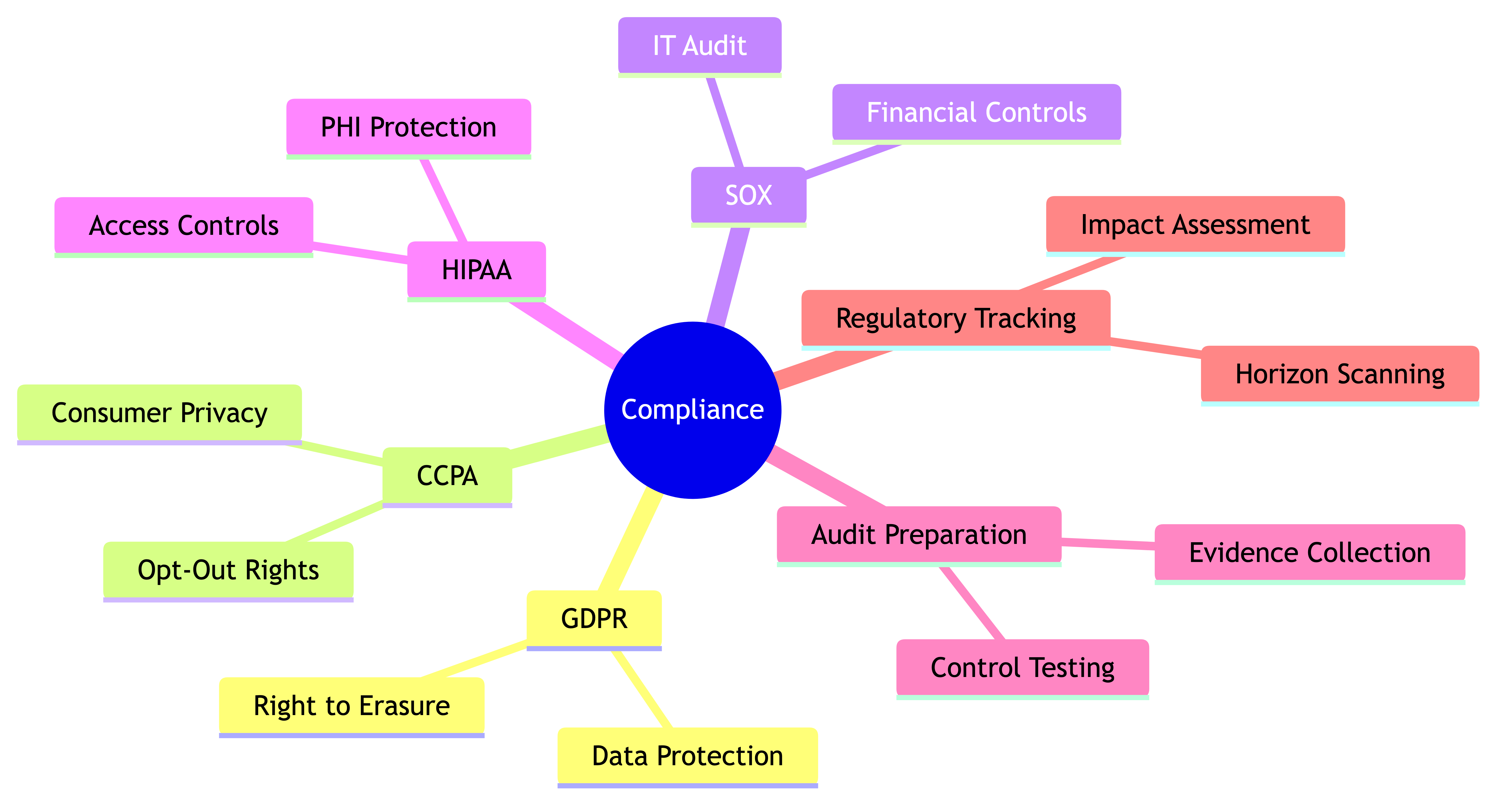
Let me tell you something that took me years to internalize: compliance isn't a tax on engineering. It's a competitive moat. Every enterprise deal you've ever lost because you couldn't answer a security questionnaire, every market you couldn't enter because you lacked the right certification — that's the real cost of treating compliance as an afterthought.
I used to groan when legal sent over new regulatory requirements. Now I see them differently. The companies that figure out compliance early don't just avoid fines — they unlock entire market segments that competitors can't touch.
Why This Matters for CTOs
You might be thinking, "Isn't compliance the legal team's problem?" Not anymore. Modern regulations like GDPR, CCPA, and HIPAA have deep technical implications. The CTO is the person who has to translate regulatory language into engineering requirements, architectural decisions, and operational processes.
If you're not leading compliance from the technology side, you're leaving it to people who don't understand your systems. And that's how you end up with expensive, painful retrofits instead of elegant, built-in solutions.
The Major Frameworks You Need to Know
GDPR (General Data Protection Regulation)
GDPR is the one that changed everything. If you process data from EU residents — and you almost certainly do — this applies to you.
The key technical requirements:
- Right to erasure: Users can request deletion of their data. This sounds simple until you realize your data is spread across 47 microservices, three data warehouses, and fourteen backup systems.
- Data portability: Users can request their data in a machine-readable format. You need to actually know where all their data lives.
- Consent management: You need granular, auditable consent records. "I agree to the terms" isn't enough anymore.
- Data minimization: Only collect what you need. That analytics table with 200 columns? Time to have a conversation about which ones are actually necessary.
- Privacy by design: This isn't a suggestion — it's a legal requirement. Privacy considerations must be baked into your architecture from the start.
The fines are real: up to 4% of global annual revenue or 20 million euros, whichever is higher. Meta was fined 1.2 billion euros in 2023. This isn't theoretical.
CCPA (California Consumer Privacy Act)
Think of CCPA as GDPR's American cousin. It's narrower in some ways but has its own teeth:
- Right to know: Consumers can ask what personal information you've collected about them and how you've used it.
- Right to delete: Similar to GDPR's right to erasure.
- Right to opt-out: Users must be able to opt out of the sale of their personal information. The definition of "sale" is broader than you think.
- Non-discrimination: You can't treat users differently because they exercised their privacy rights.
If you've built for GDPR, CCPA is manageable. If you haven't built for either, start with a framework that covers both.
SOX (Sarbanes-Oxley Act)
SOX matters the moment your company goes public or prepares for an IPO. It's about financial reporting integrity, which means:
- Change management controls: Every change to systems that affect financial reporting needs to be documented, approved, and auditable.
- Access controls: Who can access financial systems? How are those permissions granted and revoked? You need to prove it.
- Audit trails: Every modification to financial data needs a complete, tamper-proof audit trail.
- Segregation of duties: The person who writes the code shouldn't be the same person who deploys it to production. This has real implications for your CI/CD pipeline design.
I've seen companies scramble to retrofit SOX controls six months before an IPO. It's ugly, expensive, and stressful. Build these controls early.
HIPAA (Health Insurance Portability and Accountability Act)
If you touch healthcare data in any way, HIPAA is your world:
- PHI (Protected Health Information) handling: Strict rules about how health data is stored, transmitted, and accessed.
- Encryption requirements: PHI must be encrypted at rest and in transit. No exceptions.
- Access logging: Every access to PHI must be logged and auditable.
- Business Associate Agreements (BAAs): Every vendor that touches PHI needs a BAA. This limits your technology choices significantly.
- Breach notification: You have 60 days to notify affected individuals and HHS after discovering a breach. The clock starts ticking immediately.
HIPAA violations can result in fines up to $1.5 million per violation category per year. And individuals can face criminal charges.
Building Compliance Into Engineering Processes
Here's the key insight: compliance should be a property of your engineering process, not a separate workstream. When compliance is baked in, it's almost free. When it's bolted on, it's enormously expensive.
The Compliance-as-Code Approach
Treat compliance requirements like you treat any other engineering requirement:
1. Translate regulations into specific, testable requirements
2. Implement those requirements in code and infrastructure
3. Write automated tests that verify compliance
4. Run those tests in CI/CD — compliance checks on every deploy
5. Generate audit evidence automatically
This isn't aspirational. Companies do this today. Your infrastructure-as-code already has the building blocks. Add compliance policies as code alongside it.
Data Classification
Before you can comply with anything, you need to know what data you have and how sensitive it is. Create a data classification system:
- Public: Marketing materials, public documentation
- Internal: Internal communications, non-sensitive business data
- Confidential: Customer data, financial data, business strategies
- Restricted: PII, PHI, payment card data, credentials
Every data store in your system should have a classification. Every service that processes data should know what classification level it's handling. This sounds bureaucratic, but it's the foundation everything else builds on.
Privacy Engineering Patterns
Some architectural patterns make compliance dramatically easier:
- Data inventory: Maintain a living catalog of what personal data you store, where it lives, why you have it, and when it should be deleted.
- Consent service: Build a centralized consent management service. Every other service checks consent before processing personal data.
- Anonymization pipelines: Build pipelines that anonymize data for analytics so you can get insights without touching PII.
- Retention automation: Don't just write a retention policy — automate it. Data should delete itself when its retention period expires.
- Right-to-erasure workflows: Build an automated workflow that can find and delete all of a user's data across every system. Test it regularly.
Access Control and Audit
Every compliance framework cares about access control. Build it right once:
- Principle of least privilege: Engineers should only have access to the data and systems they need for their current work. Not "might need someday" — need now.
- Just-in-time access: For sensitive systems, grant temporary access that automatically expires. Tools like HashiCorp Vault make this practical.
- Comprehensive audit logging: Log every access to sensitive data. Who accessed what, when, from where, and why. Make these logs tamper-proof and retain them for the required period.
- Regular access reviews: Quarterly reviews of who has access to what. Automate the generation of these reports.
Audit Preparation
Audits are a fact of life. The question is whether they're painful or routine.
Continuous Audit Readiness
The worst approach to audits is the "fire drill" — scrambling to gather evidence when auditors show up. Instead, build systems that are always audit-ready:
- Automated evidence collection: Your CI/CD pipeline should generate compliance evidence as a byproduct of normal operations. Code review records, deployment approvals, test results, access logs — all of this should be automatically collected and organized.
- Policy-as-code: Write your compliance policies as executable code. When an auditor asks "how do you ensure X?", you can show them the automated check that runs on every deployment.
- Compliance dashboards: Build dashboards that show your current compliance status in real time. When an auditor asks about your encryption coverage, you should be able to pull it up in seconds, not days.
Working With Auditors
A few tips from someone who's been through many audits:
- Be transparent: Don't hide problems. Auditors find them anyway, and dishonesty destroys trust. If you have a known gap, show your remediation plan.
- Assign an audit liaison: Have a senior engineer who understands both the technical systems and the compliance requirements. They should be the primary point of contact for auditors.
- Prepare your team: Engineers will be interviewed. Make sure they understand the processes and can articulate why things work the way they do.
- Document everything proactively: Don't wait for the auditor to ask. Have your evidence organized and ready. A well-prepared audit takes weeks. A poorly prepared one takes months.
Regulatory Change Tracking
Regulations evolve constantly. New laws get passed, existing ones get amended, enforcement priorities shift. You need a system for staying current.
Building a Regulatory Radar
- Subscribe to regulatory updates: Follow the relevant regulatory bodies. For GDPR, follow the European Data Protection Board. For CCPA, follow the California Attorney General's office. For your industry, follow the relevant agencies.
- Legal-engineering sync: Meet with your legal team monthly to discuss upcoming regulatory changes and their technical implications. Catch things early, when they're cheap to address.
- Industry groups: Join industry compliance groups. Other CTOs are dealing with the same regulations. Learn from their approaches.
- Regulatory impact assessments: When a new regulation is announced, do a formal assessment: What systems are affected? What changes are needed? What's the timeline? What's the cost?
Compliance as a Business Enabler
This is the section I want you to read twice. Compliance isn't just about avoiding fines. It's about unlocking business opportunities.
Enterprise Sales Acceleration
Enterprise buyers have compliance requirements. If you already meet them, you close deals faster. If you don't, you lose deals entirely.
I've seen startups lose seven-figure deals because they couldn't pass a security questionnaire. I've also seen startups win deals specifically because they had SOC 2 and the competitor didn't.
Common enterprise requirements that gate deals:
- SOC 2 Type II certification
- GDPR compliance (for any EU customer)
- HIPAA compliance (for healthcare)
- ISO 27001 certification
- FedRAMP authorization (for government)
Each certification you earn opens a new segment of the market.
Market Expansion
Different markets have different regulatory requirements. GDPR for Europe, LGPD for Brazil, POPIA for South Africa, PIPL for China. Each one you comply with is a market you can enter.
Trust and Brand Value
In an era of data breaches and privacy scandals, compliance is a trust signal. Customers increasingly care about how their data is handled. Being able to say "we're GDPR compliant and SOC 2 certified" isn't just for enterprise sales — it's a brand differentiator.
Investor Confidence
Investors, especially late-stage ones, care about regulatory risk. A company with strong compliance practices is a lower-risk investment. I've seen compliance maturity directly influence valuation discussions.
The Cost of Non-Compliance
Let's talk about what happens when you get it wrong.
Direct Costs
- Fines: GDPR fines can reach 4% of global revenue. HIPAA fines can reach $1.5 million per violation category. These aren't theoretical — they're enforced.
- Legal costs: Defending against regulatory actions is expensive. Budget six to seven figures for a serious enforcement action.
- Remediation costs: Fixing compliance issues under pressure costs 5-10x what it would have cost to build it right in the first place.
Indirect Costs
- Lost deals: The enterprise deals you never close because you can't pass due diligence. This is often the largest cost, and it's invisible because you never see the deals you didn't get.
- Reputation damage: A public compliance failure — especially a data breach — damages your brand for years.
- Engineering drag: Retrofitting compliance is enormously disruptive. It pulls engineers off feature work for months.
- Talent loss: Good engineers don't want to work at companies with sloppy security and compliance practices. It signals broader engineering culture problems.
Working With Legal
The CTO-legal relationship is one of the most important and most underinvested relationships in most companies.
Building the Relationship
- Learn their language: You don't need a law degree, but you should understand basic legal concepts. What's a data processor vs. a data controller? What's the difference between a regulation and a directive? This effort pays dividends.
- Teach them yours: Help legal understand your architecture at a high level. They can't give you good advice if they don't understand your systems.
- Regular cadence: Meet monthly, not just when there's a crisis. Build the relationship before you need it.
- Shared artifacts: Create shared documents that translate between legal requirements and technical implementations. A "compliance crosswalk" that maps regulatory requirements to specific technical controls is invaluable.
Common Friction Points
- Speed vs. thoroughness: Engineering wants to move fast. Legal wants to be thorough. Find the middle ground — risk-based approaches that are fast for low-risk changes and thorough for high-risk ones.
- Ambiguous requirements: Regulations are often vague. Legal may not give you a definitive answer. Build for the stricter interpretation when the risk is high.
- Vendor assessments: Legal wants to review every vendor. Engineering wants to use the best tool. Streamline the vendor assessment process so it's fast for low-risk vendors and thorough for high-risk ones.
Real-World Examples
The GDPR Wake-Up Call
A Series C SaaS company I advised stored customer data across twelve microservices with no centralized data inventory. When GDPR enforcement began, they received their first data subject access request and realized they had no way to find all of a user's data across their systems. It took three engineers two weeks to manually fulfill that single request. They then spent four months building an automated data inventory and subject access request system. If they'd built it from the start, it would have taken two weeks.
Compliance as a Sales Weapon
A B2B startup I worked with invested early in SOC 2 Type II and HIPAA compliance. Their competitor had a better product but no certifications. In head-to-head enterprise evaluations, the startup won repeatedly because the competitor couldn't pass procurement's security review. That compliance investment — about 3M in enterprise revenue that year.
The SOX Scramble
A late-stage company preparing for IPO discovered that their deployment process had no change management controls. Developers could push directly to production with no approval. The SOX remediation took six months, delayed the IPO by a quarter, and cost over $1M in engineering time and consulting fees. All because nobody thought about SOX controls during the three years of rapid growth.
The Vendor Blind Spot
A healthtech company had excellent HIPAA controls for their own systems but hadn't properly assessed their third-party vendors. An auditor discovered that a logging vendor was storing PHI without a Business Associate Agreement. The remediation required migrating to a HIPAA-compliant logging provider under time pressure — an expensive and risky operation that could have been avoided with proper vendor assessment upfront.
Common Mistakes
1. Treating Compliance as a One-Time Project
Compliance isn't a project with a start and end date. It's an ongoing program. Regulations change, your systems change, your data practices change. Build continuous compliance, not point-in-time compliance.
2. Over-Engineering Compliance
I've seen teams build massive compliance platforms when a spreadsheet and some scripts would have sufficed. Start simple. Automate incrementally. Don't build a compliance cathedral when a compliance cottage will do.
3. Ignoring Compliance Until It's Urgent
The worst time to start compliance work is when a customer is demanding SOC 2 to close a deal next month, or when you've received a regulatory inquiry. Start early, when the pressure is low and the cost is minimal.
4. Siloing Compliance From Engineering
If compliance is owned entirely by a GRC team that's disconnected from engineering, you'll end up with policies that don't reflect reality and controls that don't actually work. Compliance must be embedded in engineering.
5. Copy-Pasting Policies
Downloading a compliance policy template and putting your company name on it is a recipe for audit failure. Auditors can tell when policies don't match reality. Your policies should describe what you actually do, not what a template says you should do.
6. Underinvesting in Data Inventory
You can't protect data you don't know about. You can't delete data you can't find. You can't report on data you haven't classified. Data inventory is the foundation. Without it, everything else is guesswork.
7. Forgetting About Backups
Your retention policy says you delete data after 90 days. But your backups retain it for a year. That backup tape with the data a user asked you to delete? You're still non-compliant. Include backups in your compliance architecture.
8. Not Testing Your Compliance Controls
Having a right-to-erasure process isn't enough. Test it regularly. Can you actually find and delete all of a user's data? Time yourself. If it takes a team of engineers a week, your process isn't working.
Building Your Compliance Roadmap
Here's how I'd approach compliance if I were starting fresh:
Phase 1: Foundation (Months 1-3)
- Build a data inventory: what data, where, why, how long
- Classify all data stores
- Implement basic access controls and audit logging
- Establish a legal-engineering sync cadence
Phase 2: Core Controls (Months 3-6)
- Implement consent management
- Build automated data subject request workflows
- Implement encryption at rest and in transit for sensitive data
- Start SOC 2 preparation if enterprise sales are a priority
Phase 3: Automation (Months 6-12)
- Implement compliance-as-code in CI/CD pipelines
- Build compliance dashboards
- Automate evidence collection for audits
- Achieve your first certification
Phase 4: Maturity (Ongoing)
- Continuous monitoring and improvement
- Regular testing of compliance controls
- Expand certifications based on market needs
- Contribute to industry compliance standards
Business Value
Compliance delivers measurable business value across multiple dimensions:
- Revenue enablement: Each certification opens new market segments. SOC 2 alone can unlock enterprise deals worth millions. HIPAA opens healthcare. FedRAMP opens government.
- Faster sales cycles: When your compliance documentation is ready, enterprise procurement moves faster. I've seen deal cycles shorten by 30-40% when compliance artifacts are readily available.
- Reduced risk exposure: Proactive compliance costs a fraction of reactive remediation. A 5M breach response. The math is straightforward.
- Valuation impact: Acquirers and investors discount companies with regulatory risk. Strong compliance practices directly support higher valuations.
- Competitive differentiation: In markets where compliance is hard (healthcare, financial services, government), being compliant is a moat. Competitors who can't match your certifications can't compete for the same deals.
- Customer trust: Privacy and security are increasingly important to customers. Compliance certifications are tangible proof that you take data protection seriously.
The CTO who understands compliance isn't just protecting the company — they're building a strategic asset that drives growth, reduces risk, and increases the company's value. That's not a burden. That's leverage.
Summary
Regulatory compliance is one of those areas where the CTO's mindset matters enormously. If you see it as a cost center, it will be expensive, painful, and always playing catch-up. If you see it as a strategic investment, it becomes a source of competitive advantage, revenue enablement, and organizational resilience.
Build compliance into your engineering DNA. Automate relentlessly. Partner closely with legal. And most importantly, start early — the best time to build compliance into your systems is before you need it.
The companies that get compliance right don't just avoid fines. They win the deals that competitors can't even bid on.
Common Pitfalls
-
Treating compliance as a one-time project with a start and end date. Regulations change, systems change, and data practices evolve. Building continuous compliance is essential; point-in-time efforts go stale immediately.
-
Ignoring compliance until a customer demands a certification or a regulator sends an inquiry. Starting under pressure costs five to ten times what building it proactively would have cost and typically results in ugly, painful retrofits.
-
Siloing compliance away from engineering. When a GRC team that is disconnected from engineering owns compliance, policies do not reflect reality and controls do not actually work. Compliance must be embedded in the engineering process.
-
Copy-pasting policy templates without adapting them. Auditors can tell when policies do not match reality. Your policies must describe what you actually do, not what a generic template says you should do.
-
Underinvesting in data inventory. You cannot protect data you do not know about, delete data you cannot find, or report on data you have not classified. Data inventory is the foundation without which everything else is guesswork.
-
Forgetting about backups in retention and deletion policies. Your retention policy says delete after 90 days, but backups retain the data for a year. That backup with the data a user asked you to delete means you are still non-compliant.
Key Takeaways
-
Compliance is not a tax on engineering. It is a competitive moat that unlocks enterprise market segments, accelerates sales cycles, and builds customer trust.
-
GDPR, CCPA, SOX, and HIPAA all have deep technical implications. The CTO must translate regulatory language into engineering requirements, architectural decisions, and operational processes.
-
The compliance-as-code approach (translate regulations into testable requirements, automate checks in CI/CD, generate audit evidence automatically) makes compliance almost free when baked in from the start.
-
Each certification (SOC 2, HIPAA, ISO 27001, FedRAMP) opens new market segments. Prioritize certifications based on which deals they unblock and which markets they enable.
-
Privacy engineering patterns (data inventory, consent service, anonymization pipelines, retention automation, right-to-erasure workflows) make regulatory obligations manageable at scale.
-
Build a strong CTO-legal partnership with regular cadence, shared artifacts, and mutual understanding. Legal cannot give good advice without understanding your architecture, and engineering cannot build compliant systems without understanding the regulations.
-
The cost of non-compliance is not just fines. It includes lost enterprise deals, reputation damage, engineering disruption from reactive remediation, and talent loss from sloppy practices.