
Prerequisites: What You Need Before Becoming a Team Leader
You are about to step into a role where your success is no longer measured solely by the code you write. It is measured by what the people around you are able to accomplish. That shift sounds simple, but it is one of the hardest transitions in an engineering career.
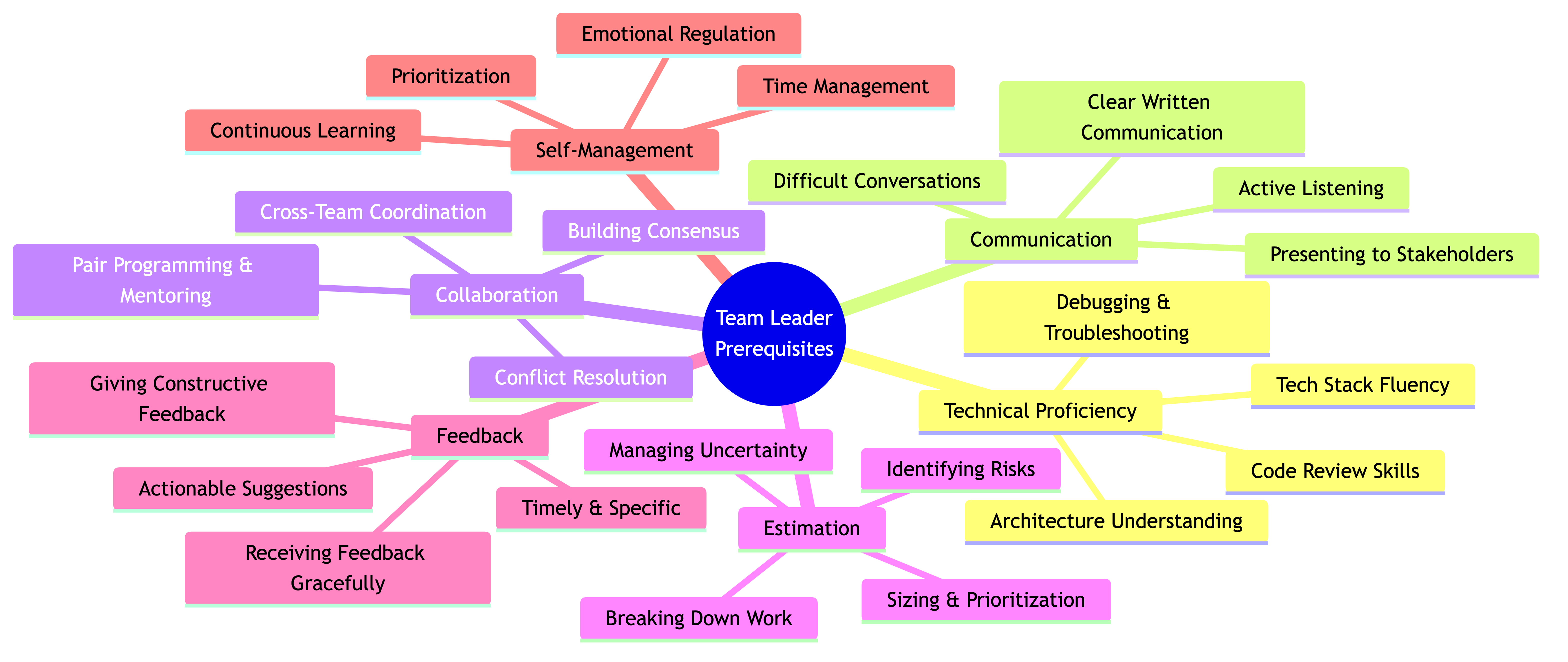
This guide covers the skills, habits, and mindsets you should have before you take the title. Not because you need to be perfect at all of them, but because trying to learn these foundations while simultaneously learning to lead is a recipe for burnout and underperformance.
Think of it this way: a team leader who lacks these prerequisites does not just struggle personally. They create drag on the entire team. The time to build this foundation is now, while you still have the space to focus on yourself.
Team Leader vs Tech Lead
Before diving in, a clarification on terminology. The title "Tech Lead" means very different things at different companies, and this distinction matters for knowing whether this content applies to you.
In many organizations, Tech Lead is an individual contributor role. The Tech Lead owns technical direction, makes architecture decisions, and mentors engineers, but does not conduct 1:1s, write performance reviews, or make hiring decisions. That is an IC leadership role, closer to Staff Engineer. If that describes your situation, you may find more relevant material in the engineering-careers section on Staff and Principal Engineer tracks.
This guide covers the management flavor of team leadership: the role where you are responsible for people. That means 1:1s, performance reviews, career development conversations, hiring, and sometimes firing. You still need technical credibility, but your primary job shifts from writing code to enabling the people who write code.
Here is how several well-known companies draw the line:
| Company | IC Technical Leadership | First Management Role |
|---|---|---|
| Tech Lead (TL) | Tech Lead Manager (TLM) | |
| Meta | Tech Lead | Engineering Manager (M1) |
| Amazon | Senior SDE / Principal | SDM (Software Dev Manager) |
| Microsoft | Senior / Principal SDE | Engineering Manager |
| Stripe | Tech Lead | Engineering Manager |
| Startups (typical) | Tech Lead / Staff Eng | Team Lead / Eng Manager |
Notice the pattern: most companies separate the IC tech leadership track from the people management track. Some roles, like Google's TLM, blend both. The content in this guide assumes you are stepping into a role with people management responsibilities, regardless of what your company calls it.
If you are unsure which track your role falls into, ask one question: "Will I write performance reviews and conduct career development conversations?" If yes, you are in the right place.
1. Technical Proficiency
You do not need to be the best engineer on the team. You need to be credible.
There is a persistent myth that the best coder should become the team leader. That is wrong, and promoting purely on technical skill is one of the most common mistakes organizations make. But the opposite extreme is also dangerous: a team leader who cannot read the code, understand the architecture, or evaluate a technical trade-off will lose the respect of the team within weeks.
Here is the bar you should clear:
You can hold your own in a code review. Not just syntactic nitpicks, but meaningful feedback. You should be able to look at a pull request and identify whether the approach is sound, whether edge cases are handled, and whether the code will be maintainable six months from now. You do not need to catch every bug, but you need to ask the right questions.
You understand the system you are working in. If someone asks you why the service is structured the way it is, you should be able to explain the reasoning, even if you did not make the original decision. You know where the bodies are buried: the fragile parts, the tech debt, the things that break at 2 AM.
You can debug under pressure. When production is down and the team is looking at you, you need to be able to contribute meaningfully to the investigation. This does not mean you personally fix every outage. It means you understand the system well enough to help triage, ask useful questions, and unblock others.
You can evaluate trade-offs. "Should we refactor this now or ship the feature first?" "Is this the right abstraction or are we over-engineering?" These are the kinds of decisions you will face constantly. You need enough technical depth to have an informed opinion, even if you ultimately defer to someone with deeper expertise in a specific area.
Why this matters before leading: If you cannot do these things as an individual contributor, you will not magically develop them as a team leader. In fact, you will have less time to build technical skills once you start leading. The window to build credibility is now.
A practical test: think about the last three technical decisions your team made. Could you explain to a senior engineer outside your team why those decisions were made, what alternatives were considered, and what the trade-offs were? If yes, your technical foundation is probably solid enough.
2. Communication Fundamentals
The single biggest differentiator between a good IC and a good leader is communication skill.
As an IC, you can get away with being the quiet person who writes great code. As a team leader, communication becomes the primary vehicle through which you do your job. You need to be building these muscles well before the promotion.
Written Communication
Emails and messages. You will write far more emails and Slack messages than you expect. The ability to be clear, concise, and unambiguous in writing is not optional. A poorly worded message to a stakeholder can create days of unnecessary work. A well-written status update can save a meeting that nobody wanted to attend.
Practice this now. When you write a message, re-read it before sending. Ask yourself: could this be misunderstood? Could it be shorter? Does the most important point come first? These habits need to be automatic by the time you are leading.
Documentation. Write design docs. Write postmortems. Write onboarding guides. Not because someone told you to, but because writing forces clarity of thought. If you cannot explain a system in writing, you do not understand it well enough. Team leaders who write well create teams that communicate well.
Pull request descriptions. This is where many engineers first learn to communicate technical decisions. A PR description that says "fixed the bug" is a missed opportunity. A description that explains what the bug was, why it happened, what the fix does, and what you considered but rejected is a gift to every person who reviews that code or reads the git history later.
Verbal Communication
Meetings. Before you lead a team, you should be comfortable speaking in meetings. Not dominating them, but contributing clearly. Can you summarize a complex technical topic in two minutes? Can you present a proposal and handle questions without getting flustered? Can you disagree with someone respectfully and hold your ground?
If you dread speaking in meetings, start small. Volunteer to give a short update in your next standup. Present a tech talk to your team. The goal is not to become a polished speaker overnight. The goal is to be comfortable enough that communication is a tool you use, not an obstacle you fight.
Presentations. You will present to stakeholders, to leadership, to other teams. Start doing this now. Present your team's work at a sprint review. Demo a feature to a product manager. The more reps you get, the more natural it becomes.
Active Listening
This is the most underrated communication skill and the one most ICs neglect.
Active listening means you are not just waiting for your turn to talk. You are genuinely trying to understand what the other person is saying, what they mean, and what they might not be saying. In practice, it looks like this:
- Paraphrasing what someone said to confirm understanding: "So what I'm hearing is that the main concern is latency, not throughput. Is that right?"
- Asking follow-up questions instead of immediately jumping to solutions.
- Noticing when someone seems hesitant or uncertain and giving them space to elaborate.
Why this matters before leading: As a team leader, people will come to you with problems. If you jump to solutions without fully understanding the problem, you will solve the wrong thing. If team members feel unheard, they will stop coming to you. Active listening is the foundation of trust, and trust is the foundation of leadership.
3. Collaboration and Teamwork
You need to prove you can be a great teammate before you can lead a team.
This should be obvious, but it is remarkable how often organizations promote people who are strong individual performers but mediocre collaborators. Being a great teammate is not the same as being friendly. It means specific, observable behaviors.
Working across teams. Have you successfully collaborated with another team on a shared project? Did you navigate the inevitable friction over priorities, interfaces, and timelines? Cross-team work is a preview of what team leadership looks like, because as a TL, almost every project involves coordination beyond your own team.
Helping others. When a junior engineer is stuck, do you help them? Not by taking over their keyboard, but by guiding them to the answer. Do you do this consistently, even when it slows down your own work? This is a direct preview of a huge part of the team leader role: unblocking others is more important than your own output.
Pair programming and knowledge sharing. Do you pair with teammates? Do you share what you learn? Do you write things down so others do not have to rediscover the same solutions? These habits indicate someone who thinks beyond their own productivity.
Handling conflict. This is the hard one. Have you been in a technical disagreement with a colleague and resolved it productively? Not by giving in to avoid confrontation, and not by steamrolling the other person, but by genuinely engaging with the disagreement, considering both perspectives, and reaching a resolution that both people can live with.
If you have not had to navigate conflict yet, you have not been challenged enough. Seek out situations where people disagree. Volunteer for projects where there are competing priorities. The experience of working through disagreement without damaging relationships is irreplaceable.
A real-world example: An engineer on a team I worked with was being considered for a TL role. Technically excellent. But when we looked at how they worked with others, there was a pattern: they would take on complex tasks, work on them in isolation, and deliver polished results. They rarely paired, rarely asked for help, and rarely offered it. They were a strong individual contributor but essentially a solo player on a team sport. They were not ready to lead. Six months of intentional collaboration work changed that.
4. Estimation Basics
If you cannot break down and estimate your own work, you cannot plan work for a team.
Estimation is one of the most practically important skills for a team leader, and it is one that most ICs get very little formal training in. The good news is that the foundation is straightforward. The bad news is that it takes practice, and there are no shortcuts.
Breaking down work. Before you can estimate anything, you need to decompose it. A task like "build the notification system" is not estimable. A task like "create the database schema for notification preferences, write the API endpoint to update preferences, implement the email sending service" is. The ability to take a large, vague requirement and turn it into a list of concrete, sequenceable tasks is fundamental.
Practice this constantly. When you pick up a ticket, before you start coding, write down every step you think is involved. Then compare your list to what actually happened. Over time, you will get better at anticipating the steps you tend to miss.
Estimating effort. Most engineers are optimistic estimators. They estimate the happy path and forget about testing, code review, edge cases, deployment, and the inevitable surprise that pops up mid-implementation. A good rule of thumb for getting started: estimate the work, then multiply by 1.5 to 2x. Track your estimates against actuals. Calibrate over time.
Communicating uncertainty. This is where most people fail. An estimate is not a promise. It is a probability distribution. Learn to say things like: "I think this is about three days of work, but there is a risk with the third-party API integration that could push it to five." Stakeholders prefer honest uncertainty over confident inaccuracy.
Identifying risks and dependencies. Part of estimation is recognizing what could go wrong. "This task depends on the DevOps team setting up the new environment. If that is delayed, we are blocked." Identifying these dependencies and risks early is one of the most valuable things a team leader does, and it starts with the ability to see them in your own work.
Why this matters before leading: As a team leader, you will be asked "when will this be done?" constantly. By your manager, by product, by stakeholders. If you have not developed the habit of breaking down, estimating, and tracking your own work, you will not be able to do it for a team. And getting estimates consistently wrong erodes trust faster than almost anything else.
5. Giving and Receiving Feedback
This is the number one skill gap for new leaders. It is also the most important one to close.
Most engineers have spent their careers receiving feedback primarily through code reviews. That is a very specific, structured, relatively low-stakes form of feedback. Leading a team requires giving and receiving feedback about behavior, performance, communication, and work habits. It is personal, it is uncomfortable, and it is essential.
Giving Feedback
Be specific. "Your code quality needs to improve" is useless feedback. "In the last three PRs, I noticed that error handling was missing in several places, which led to two bugs in staging. Let's talk about how to catch those earlier." That is feedback someone can act on.
Be timely. Feedback loses value with every day you wait. If something happened on Monday, giving feedback on Friday means the other person has to reconstruct the context. Give feedback as close to the event as possible.
Separate the behavior from the person. "You are careless" is a character judgment. "The deployment on Tuesday was missing the database migration step, which caused a 30-minute outage" is an observation about a specific behavior. The first puts someone on the defensive. The second opens a conversation about process.
Use a framework until it becomes natural. The SBI model (Situation, Behavior, Impact) is a good starting point. "In yesterday's sprint planning [situation], when you dismissed the junior engineer's estimate without explanation [behavior], it made them hesitant to speak up for the rest of the meeting [impact]." It feels formulaic at first. It becomes natural with practice.
Do not avoid hard conversations. Many new leaders fail because they avoid giving critical feedback. They let small problems become big problems because the conversation is uncomfortable. Start building this muscle now. When you see something that is not working, say something. Do it respectfully, do it privately, but do it.
Receiving Feedback
Your first reaction will be defensive. That is normal. Do not act on it. When someone tells you that something you did was not great, your brain will immediately start generating justifications. Let that happen internally. Externally, say "thank you for telling me that" and ask a clarifying question.
Seek feedback proactively. Do not wait for your annual review. Ask teammates, ask your manager, ask people outside your team. "What is one thing I could do better?" is a simple question that yields enormous insight. And it signals that you are someone who takes growth seriously.
Close the loop. When someone gives you feedback and you act on it, tell them. "Hey, you mentioned last month that my PR descriptions were too brief. I've been working on that. Have you noticed a difference?" This reinforces the feedback culture and shows that you value the input.
A real-world example: I once watched a new team leader receive feedback from their manager that their standup updates were too detailed and were losing the attention of stakeholders. The TL's first response was to explain why every detail was necessary. The manager had to give the same feedback three more times before the TL actually shortened their updates. Do not be that person. When someone gives you feedback, assume they are at least partially right, even if your instinct says otherwise.
6. Self-Management
If you cannot manage yourself, you cannot manage a team.
This section is less glamorous than the others, but it is the bedrock. A team leader who misses deadlines, forgets commitments, shows up late to meetings, or constantly fights fires of their own creation will drain the team's energy and credibility.
Time management. As an IC, your calendar is mostly your own. As a TL, a significant portion of your time will be consumed by meetings, 1:1s, planning sessions, and interruptions. If you do not already have a system for managing your time, build one now. It does not need to be complicated. A calendar you actually look at, a task list you actually update, and the discipline to protect focused work time are enough.
Prioritization. You will always have more things to do than time to do them. The ability to identify what actually matters right now and let the rest wait is critical. A useful filter: "If I can only do three things today, what are they?" Use that filter daily. It trains you to distinguish between urgent and important.
Accountability and follow-through. If you say you will do something, do it. If you cannot do it, say so before the deadline, not after. This is table stakes for a leader, but it needs to be a deeply ingrained habit, not something you aspire to. Track your commitments. Every dropped ball as a TL is visible to the entire team and slowly erodes trust.
Managing your energy. This is less discussed but equally important. Know when you do your best work. Protect that time. Know what drains you and build in recovery. Team leadership is emotionally taxing in ways that IC work is not, and if you arrive at the role already running on empty, you will burn out.
Reliability. The simplest and most powerful thing you can do as a prospective team leader is be the person everyone can count on. Show up when you say you will. Deliver what you promise. Respond to messages in a reasonable timeframe. These small acts of reliability compound into a reputation that makes the transition to leadership dramatically easier.
7. How to Know You Are Ready
Signs that you are ready for the transition
-
People already come to you for help. Not just technical questions, but advice on how to approach problems, how to handle a tricky situation, or what to prioritize. If you are already informally leading, the formal role is a natural next step.
-
You think about the team's output, not just your own. When you finish a feature, your first thought is not "what should I build next?" but "is anyone on the team blocked that I could help?" This shift from individual productivity to team productivity is the core mindset change.
-
You can give feedback without damaging relationships. You have had hard conversations with peers and both of you came out of it with mutual respect intact. This is not theoretical. You have actually done it, more than once.
-
You are trusted by the people who would report to you. Not just liked, but trusted. They believe you have their best interests in mind and that you will be fair. If you are unsure, this is worth a direct conversation with your manager or a trusted peer.
-
You can handle ambiguity. When requirements are unclear, when priorities shift, when the path forward is uncertain, you do not freeze or panic. You gather information, make a reasonable decision, and adjust as you learn more.
-
You are excited about enabling others, not just doing the work yourself. If the thought of spending less time coding and more time supporting others feels like a loss rather than an opportunity, you may not be ready yet. And that is completely fine.
Signs that you need more time
-
You struggle to give direct feedback. If you consistently avoid difficult conversations or sugarcoat feedback to the point of meaninglessness, you need more practice. Leading without the ability to give honest feedback is a disservice to your team.
-
You have not worked through a real conflict. If every collaboration has been smooth sailing, you have not been tested. Seek out harder projects, cross-team work, or situations with competing priorities.
-
You resent interruptions. If being pulled away from your code to answer questions or help a teammate feels like a burden rather than part of the job, the TL role will make you miserable. In the TL role, interruptions are not distractions from the work. They are the work.
-
You measure your value by your personal output. If your sense of accomplishment comes exclusively from what you build, and not from what you help others build, the transition will feel like a demotion.
-
You have not built trust outside your immediate team. Leadership requires relationships with product managers, designers, other team leads, and management. If those relationships do not exist yet, start building them.
8. How to Prepare
Practical steps you can take while still an IC
Mentor someone. Formally or informally, take responsibility for helping a junior or mid-level engineer grow. This gives you practice in feedback, teaching, and measuring someone else's progress. It is the closest thing to team leadership you can do as an IC.
Volunteer to lead a project. Not a team, but a project. Take ownership of a feature from planning through delivery. Coordinate with stakeholders, break down the work, track progress, and communicate status. This is a low-risk way to practice the planning and coordination aspects of the TL role.
Run a meeting. Offer to facilitate the next retro, run sprint planning, or lead a design review. Pay attention to how you manage the room. Are all voices heard? Does the meeting end with clear outcomes? Running meetings well is an underappreciated leadership skill.
Practice estimation publicly. Start sharing your estimates and tracking them against reality. "I estimated three days, it took five, and here is why." This builds the estimation muscle and demonstrates maturity and self-awareness.
Ask for a 360 review. Even if your organization does not have a formal process, ask your manager, peers, and anyone you work closely with for candid feedback. It will reveal blind spots you did not know you had.
Shadow a current team leader. Ask to sit in on their 1:1s (with the other person's permission), attend their planning sessions, or just have a regular conversation about what the role is actually like day to day. The gap between what you imagine the role is and what it actually is can be significant.
Read, but do not over-read. Books like "The Manager's Path" by Camille Fournier and "An Elegant Puzzle" by Will Larson are excellent. Read one or two, absorb the ideas, and then focus on practice. Reading about leadership without practicing it is like reading about swimming without getting in the pool.
Build relationships outside your team. Have coffee with the product manager, talk to the designer, get to know the engineering managers. When you become a TL, you will need these relationships, and building them from scratch while also learning to lead is unnecessarily hard.
Start thinking in systems. When something goes wrong, do not just fix it. Ask why it happened, whether it could happen again, and what process or tooling change would prevent it. This systems-level thinking is what separates team leaders from senior ICs.
Business Value
Understanding why these prerequisites matter is not just about personal readiness. There is a concrete business case for ensuring that new team leaders have these foundations in place before the promotion.
Revenue Impact
A well-prepared team leader accelerates delivery. When a TL can credibly evaluate technical trade-offs, break down work into accurate estimates, and communicate clearly with stakeholders, the team ships faster and with fewer surprises. In a product organization, this directly translates to revenue: features reach customers sooner, sales commitments are met, and the team becomes a reliable unit that the business can plan around.
Conversely, a poorly prepared TL creates unpredictability. Missed deadlines, miscommunicated priorities, and unresolved team friction all slow delivery. For a team of five to eight engineers, even a 10-15% reduction in velocity due to leadership gaps costs the equivalent of losing an engineer. Depending on the market and the team's domain, that can mean hundreds of thousands of dollars in delayed value.
Efficiency Gains
When a new TL already has strong fundamentals, the ramp-up period drops dramatically. Instead of spending the first three to six months learning how to give feedback, run meetings, and estimate work, the new TL can immediately focus on the unique challenges of their team and domain.
The team also benefits. Engineers on a well-led team spend less time in confusion, less time in unnecessary meetings, and less time redoing work because of miscommunication. The compounding effect is significant: a team with a prepared leader operates at a noticeably higher level within weeks, while a team with an unprepared leader may not stabilize for months.
Planning accuracy is another major efficiency gain. A TL who can estimate well means fewer missed deadlines, fewer emergency re-prioritizations, and fewer uncomfortable conversations with stakeholders. The downstream effect on product planning, sales timelines, and resource allocation is substantial.
Cost of Skipping These Prerequisites
When someone is promoted to team leader without these foundations, the costs are real and often hidden.
Attrition. The most expensive consequence is losing team members. Engineers leave bad managers more than they leave bad companies, and a team leader who cannot communicate, give feedback, or manage conflict will drive people away. Replacing a single engineer costs between 50% and 200% of their annual salary when you account for recruiting, onboarding, and lost productivity.
Re-work and delivery delays. A TL who cannot estimate or break down work leads a team that consistently over-commits and under-delivers. The resulting re-planning, context-switching, and stakeholder management overhead is enormous.
Cultural damage. A team leader sets the tone for the team. One who avoids feedback creates a team where problems fester. One who communicates poorly creates a team where information is unreliable. These cultural patterns are surprisingly hard to reverse, even after the leader improves or is replaced.
Burnout of the leader. Perhaps the most direct cost: the new TL themselves. Learning to lead without a foundation is exhausting. Many promising engineers burn out in their first year of leadership, leave the role, or leave the company entirely. The organization loses both a leader and a strong IC.
Measurable Outcomes: How to Assess Readiness
Readiness is not a feeling. It can and should be evaluated with observable evidence.
| Area | What to Look For | How to Assess |
|---|---|---|
| Technical proficiency | Consistently high-quality code reviews; ability to explain system architecture to outsiders; effective debugging under pressure | Review code review history; ask peers for assessment; observe behavior during incidents |
| Communication | Clear PR descriptions; effective written updates; comfortable presenting in meetings | Review written artifacts; observe in meetings; solicit peer feedback |
| Collaboration | Track record of cross-team work; history of helping others; productive conflict resolution | Review project history; ask teammates; look at mentoring or pairing activity |
| Estimation | Estimates that are consistently within 20-30% of actuals; ability to identify risks and dependencies | Track estimate-to-actual ratios over three to six months |
| Feedback | Has given constructive feedback that led to behavior change; receives feedback without defensiveness | Solicit examples from peers and manager; observe 360 review responses |
| Self-management | Meets commitments reliably; manages time effectively; maintains consistent output | Track delivery against commitments; observe responsiveness and reliability |
A useful rule of thumb: if you can point to specific, concrete examples in at least five of these six areas, you are likely ready. If two or more areas have no concrete evidence, invest three to six months of focused development before making the transition.
Final Thought
Becoming a team leader is not a promotion in the traditional sense. It is a career change. The skills that made you a great engineer will remain valuable, but they will no longer be sufficient. The prerequisites in this guide are not arbitrary hoops to jump through. They are the foundation that makes everything else possible.
Take them seriously. Build them deliberately. And when you step into the role, you will be ready to lead, not just manage.
Common Pitfalls
- Waiting until you have the title to start building leadership skills. The transition to team leader is hard enough without also learning foundational skills like feedback, estimation, and communication from scratch. The time to build these muscles is while you still have the space and lower stakes of an IC role.
- Assuming technical excellence alone qualifies you to lead. Being the best coder on the team does not mean you will be the best leader. Organizations that promote purely on technical skill often set people up for failure because leadership requires an entirely different set of capabilities.
- Neglecting the collaboration and conflict resolution prerequisites. Many aspiring leaders focus on technical and self-management skills while ignoring the interpersonal ones. If you have never navigated a real disagreement with a colleague, you are not ready for the volume and intensity of interpersonal challenges that come with leading a team.
- Overloading on reading without practicing. Consuming leadership books and articles can feel productive, but without applying the concepts in real situations, the knowledge stays theoretical. One real mentoring experience teaches more than five books read passively.
- Skipping the self-awareness step. Not seeking honest feedback from peers and managers about your blind spots means you will carry those blind spots directly into the leadership role, where they will be amplified and visible to everyone on your team.
- Underestimating the emotional demands of the role. Many engineers focus on the tactical prerequisites and forget that leadership is emotionally taxing in ways IC work is not. If you arrive at the role already running on empty or without strategies for managing your energy, burnout comes fast.
Key Takeaways
- The transition to team leader is a career change, not just a promotion. The skills that made you a great IC are necessary but no longer sufficient.
- Technical credibility is a prerequisite, but you do not need to be the best engineer on the team. You need to be good enough to earn respect and evaluate trade-offs.
- Communication, both written and verbal, is the single biggest differentiator between a good IC and a good leader. Build this skill before you need it.
- The ability to give and receive honest feedback is the most common skill gap for new leaders. Practice it now with peers through code reviews, project retrospectives, and direct conversations.
- Self-management, including time management, prioritization, accountability, and energy management, is the unglamorous bedrock that everything else depends on.
- Readiness can be assessed with observable evidence across six areas: technical proficiency, communication, collaboration, estimation, feedback, and self-management. If you lack concrete examples in two or more areas, invest three to six months before making the transition.
- Proactive preparation through mentoring, leading projects, running meetings, and building relationships outside your team dramatically smooths the transition when the time comes.