
Career Ladders & Promotion Frameworks
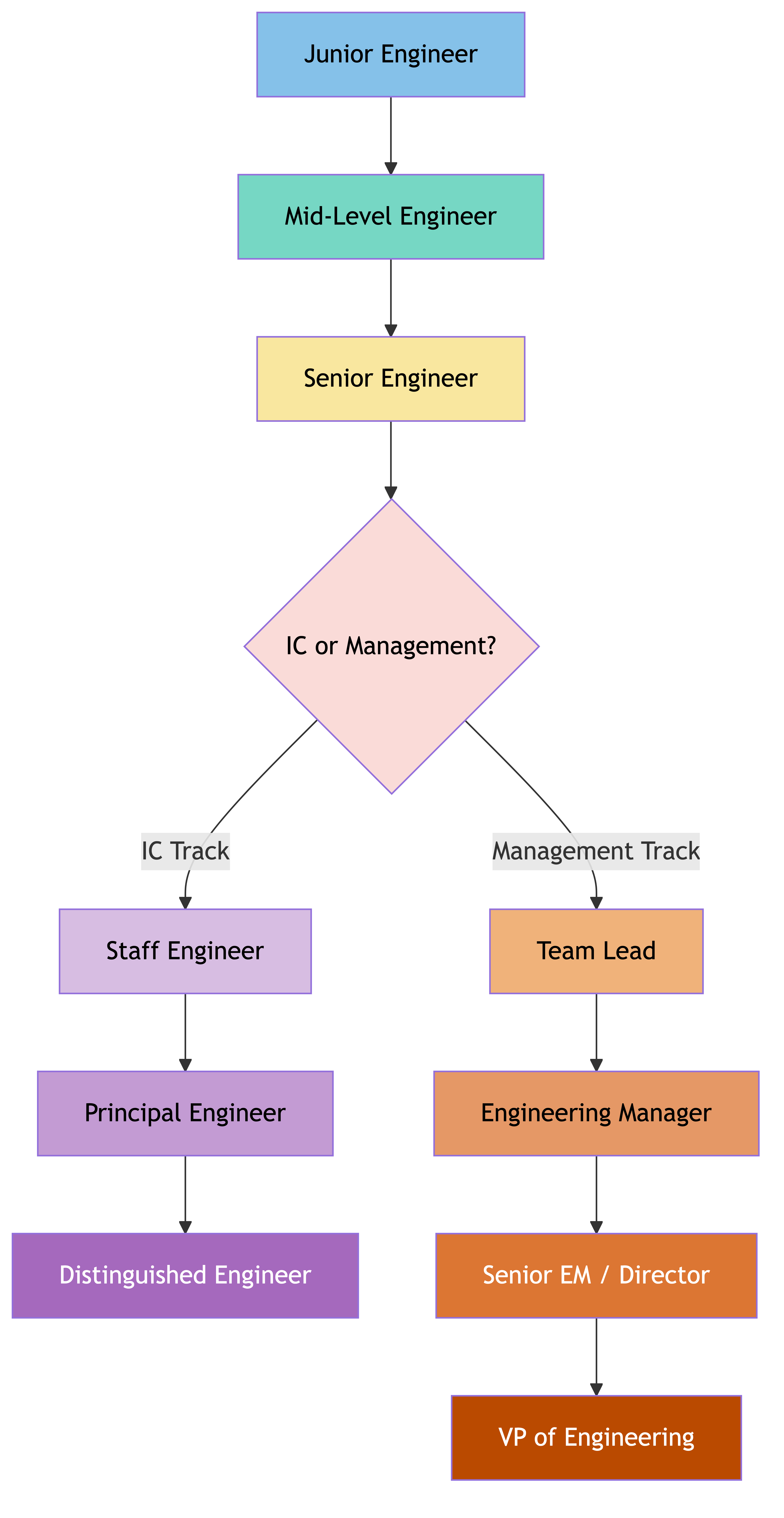
Few things will lose you good engineers faster than a fuzzy answer to "how do I grow here?" If people can't see what's ahead of them, they'll find a company where they can. Career ladders aren't bureaucracy — they're a retention tool, a fairness mechanism, and a coaching framework all rolled into one.
Let's walk through how to build one that actually works, how to use it day-to-day, and how to avoid the mistakes that turn a well-intentioned ladder into a political mess.
1. Why Career Ladders Matter
Think about the last time an engineer left your team. There's a decent chance the exit interview mentioned "lack of growth" or "unclear path forward." That's not a compensation problem. That's a clarity problem.
A career ladder does a few things at once:
- Sets expectations. People know what "good" looks like at their level and what the next level requires.
- Removes ambiguity from promotions. Instead of "I feel like I deserve it," you can point to concrete criteria.
- Forces consistency. Two senior engineers on different teams should mean roughly the same thing.
- Gives managers a coaching tool. When someone asks what they need to work on, you don't have to improvise. You open the ladder and talk specifics.
Without a ladder, promotions feel arbitrary — because they often are. The loudest person gets promoted. The person whose manager fights hardest in a calibration meeting gets promoted. The person who's been around the longest gets promoted. None of those are good reasons.
A ladder won't fix politics entirely, but it gives you a shared language and a defensible standard. That matters more than most people realize.
2. Engineering Levels
Most companies land on something close to this structure, though the names and number of levels vary:
Junior Engineer (L1 / IC1)
- Scope: Individual tasks and well-defined tickets.
- Impact: Completes assigned work with guidance.
- Autonomy: Needs regular check-ins and code review. Asks questions frequently (and should).
- What to look for: Learning speed, curiosity, willingness to ask for help, improving code quality over time.
Mid-Level Engineer (L2 / IC2)
- Scope: Features and small projects.
- Impact: Delivers features independently. Starts contributing to design discussions.
- Autonomy: Can take a well-scoped project from start to finish without hand-holding.
- What to look for: Reliable delivery, growing ownership, starting to mentor juniors informally, writing clearer code and documentation.
Senior Engineer (L3 / IC3)
- Scope: Large features, cross-cutting concerns, team-level technical decisions.
- Impact: Shapes the technical direction of their team. Unblocks others. Makes the people around them more effective.
- Autonomy: Operates independently. Identifies problems before they're assigned. Pushes back on requirements when appropriate.
- What to look for: We'll dig into this in section 4 — "senior" is where most ladders get sloppy.
Staff Engineer (L4 / IC4)
- Scope: Multi-team or org-level technical strategy.
- Impact: Drives architecture decisions that affect multiple teams. Influences the company's technical direction.
- Autonomy: Largely self-directed. Sets their own agenda based on what the organization needs.
- What to look for: Can they identify the highest-leverage problem in the org and make progress on it without being told? Do other teams seek them out?
Principal Engineer (L5 / IC5)
- Scope: Company-wide or industry-level impact.
- Impact: Defines technical vision. Makes bets on technology that shape the company for years.
- Autonomy: Full autonomy. Reports to senior leadership. Operates more like a technical executive.
- What to look for: This is rare. Most companies have very few principals, and that's fine.
A few notes on this structure. First, the jump from Senior to Staff is the hardest one on the ladder. It's where scope goes from "my team" to "multiple teams," and that's a fundamentally different skill set. Second, not every engineer needs to reach Staff or Principal. A long, impactful career as a Senior Engineer is a great outcome. Your ladder should make that feel respected, not like a dead end.
3. Competency Matrices
Levels alone aren't enough. You need to define what you're evaluating at each level. Most good frameworks break this into dimensions — usually something like:
Technical Skills
What quality of code do they write? How well do they understand systems? Can they debug hard problems? Do they make sound architectural decisions?
- Junior: Writes working code with guidance. Learning the codebase.
- Mid: Writes clean, tested code. Understands the systems they work in.
- Senior: Designs systems. Makes trade-off decisions. Deep expertise in at least one area.
- Staff: Defines technical standards across teams. Evaluates build-vs-buy decisions.
Delivery
Do they ship? On time? Do they manage scope and communicate risks?
- Junior: Completes tasks. Learning to estimate.
- Mid: Delivers features. Estimates are usually in the right ballpark.
- Senior: Drives projects end-to-end. Manages scope proactively. Delivers consistently.
- Staff: Delivers on multi-quarter initiatives. Navigates organizational complexity to get things done.
Communication
Can they explain their work? Do they write things down? Can they influence without authority?
- Junior: Asks good questions. Communicates status.
- Mid: Writes clear PRs and documentation. Presents in team meetings.
- Senior: Writes technical proposals. Communicates effectively with non-technical stakeholders. Influences team decisions.
- Staff: Writes strategy documents. Presents to leadership. Aligns multiple teams around a technical direction.
Leadership
Do they make the people around them better?
- Junior: Participates. Helps when asked.
- Mid: Mentors newer engineers informally. Helps onboard new team members.
- Senior: Mentors consistently. Drives hiring standards. Shapes team culture and practices.
- Staff: Grows senior engineers. Defines engineering culture at the org level. Sponsors initiatives.
Business Impact
Do they understand why they're building what they're building?
- Junior: Understands the task. Starting to learn the domain.
- Mid: Understands the feature and its users. Asks "why" questions.
- Senior: Connects technical work to business outcomes. Proposes solutions that balance engineering quality with business needs.
- Staff: Identifies technical investments that drive business results. Partners with product and business leadership.
The key thing about a competency matrix: nobody is going to be at the same level across every dimension. A senior engineer might be exceptional technically but still growing in communication. That's fine — you're looking for a overall pattern, not perfection in every cell. The matrix gives you a way to have specific, grounded conversations about where someone is strong and where they need to develop.
4. What "Senior" Actually Means
This deserves its own section because "senior" is where most companies get it wrong. The failure mode is simple: someone's been on the team for three to five years, they're reliable, they haven't caused any major incidents, so they get promoted to senior. Then everyone's confused about what senior means, because it's full of people who are really just experienced mid-level engineers.
Here's what Senior should actually mean:
Scope of influence. A senior engineer's impact extends beyond their own code. They're shaping how the team builds software — influencing architecture, setting patterns, improving processes. If they left, the team would lose more than just a pair of hands.
Independence. You can give a senior engineer a problem, not a solution, and trust them to figure it out. They don't just implement specs — they push back on bad ideas, propose alternatives, and make trade-off decisions.
Handling ambiguity. Mid-level engineers thrive with clear requirements. Senior engineers thrive when the requirements are a mess. They can take a vague goal and turn it into a concrete plan.
Multiplying others. This is the big one. A senior engineer makes the people around them more effective. Through mentoring, through code review, through writing great documentation, through building tools that save the team time. If someone is individually productive but doesn't lift others up, they're a strong mid-level engineer, not a senior.
Driving projects end-to-end. Not just writing the code — scoping the work, breaking it into milestones, communicating progress, handling the unexpected, and getting it to production.
When you're evaluating whether someone is "senior," ask yourself: would I be comfortable giving this person a critical, ambiguous, multi-week project and stepping away? Would they figure it out, keep stakeholders informed, and deliver something good? If the answer is yes, you're looking at a senior engineer.
5. Promotion Criteria
Here's the single most important principle for promotions:
Promote when someone is already performing at the next level, not as a reward for time served.
Or as I like to say: "Promote for where you are, not where you've been."
This means a few things in practice:
Evidence should be backward-looking. When you put together a promotion case, you're pointing to work that's already been done. "Over the past two quarters, this person has consistently operated at the senior level by doing X, Y, and Z." You're not promoting on potential — you're recognizing a reality.
Time in role is not a criterion. Some people are ready to be promoted in eighteen months. Some take four years. Some are never ready for the next level, and that's okay. The question is always: are they performing at the next level?
The bar should be clear. If someone asks "what do I need to do to get promoted?" and you can't give them a specific, actionable answer, your criteria aren't good enough. Vague answers like "just keep doing great work" are a cop-out.
Promotion should feel like a formality. In the best cases, by the time the promotion happens, it's obvious to everyone. The person's been operating at the next level for months. Their peers already treat them as if they have that title. The formal promotion is just the paperwork catching up.
You need both performance and scope. Someone can be excellent at their current level without being ready for the next one. Promotion isn't about doing your current job really well — it's about demonstrating you can do the next job. These are different things.
6. Calibration Sessions
A career ladder on paper means nothing if it's not applied consistently. That's where calibration comes in.
What Calibration Is
Calibration is when managers from across the organization get together and review promotion candidates against a shared standard. The goal is consistency — a senior engineer on Team A should meet roughly the same bar as a senior engineer on Team B.
How to Run Calibration
- Managers prepare written cases in advance. Each case should include: the candidate's current level, the proposed level, concrete evidence mapped to the competency matrix, and peer input.
- Present and discuss. Each manager presents their candidates. The group asks questions, pushes back, and compares candidates to each other and to the bar.
- Decide as a group. The decision should be collective, not individual. If a manager is the only one who thinks their report is ready, that's a signal.
- Document the decision. Whether approved or not, write down the rationale. This is essential for the follow-up conversation with the candidate.
What a Strong Promotion Case Looks Like
A strong case includes:
- Specific examples, not vague praise. "Led the migration of our payment system to the new architecture, coordinating across three teams over two quarters" — not "is a great engineer."
- Evidence across multiple dimensions. If the case only mentions technical skill, it's incomplete.
- Peer and stakeholder input. What do people who work with this person say? Do they seek them out?
- A narrative arc. How has this person grown? What were they working on six months ago versus now?
What a Weak Case Looks Like
- "They've been at this level for three years, so it's time."
- "They're really smart and everyone likes them."
- "We'll lose them if we don't promote them."
- Evidence from one big project and nothing else.
If the case relies on tenure, likability, or retention risk instead of demonstrated performance at the next level, it should be pushed back.
7. Having the Promotion Conversation
"What Do I Need to Do to Get Promoted?"
This is one of the most common and most important questions an engineer will ask you. You need to have a clear, specific, honest answer.
A good response looks like: "You're currently performing solidly at the mid level. To get to senior, I'd need to see you doing three things more consistently. First, taking projects from start to finish without me stepping in to unblock you. Second, mentoring at least one other engineer in a visible way. Third, proposing technical solutions in design reviews instead of just reviewing others' proposals. Here's what I'd suggest we focus on this quarter."
A bad response looks like: "Just keep doing what you're doing and it'll happen." That tells the person nothing and erodes trust.
When Someone Isn't Ready
This is harder, but it's one of the most important conversations you'll have as a manager. Be honest and specific.
- Don't be vague. "You're not quite there yet" without specifics is demoralizing and unhelpful.
- Don't blame the system. "There just aren't enough slots" might be true sometimes, but if someone is performing at the next level, your job is to fight for them.
- Be concrete about the gap. "Here's what I see at the senior level that I don't see from you yet, and here's what we can do about it."
- Make a plan together. Turn the conversation into a growth plan with concrete milestones and a rough timeline.
- Follow up. Don't have this conversation once and forget about it. Check in monthly on the growth areas.
When Someone Was Passed Over
Sometimes someone you advocated for doesn't get promoted in calibration. This conversation requires extra care.
Be transparent about what happened (without throwing other managers under the bus). Explain the specific feedback. Acknowledge their frustration. And then work with them on a concrete plan to close the gap for the next cycle. If you handle this well, you often get a more motivated engineer. If you handle it poorly, you lose them.
8. The Management vs. IC Track
One of the most common mistakes in engineering organizations is treating management as the only path to advancement. When "moving up" means "becoming a manager," you get two bad outcomes: you lose great engineers who don't want to manage, and you gain mediocre managers who only took the role for the title and compensation.
Both Tracks Should Be Equal
A Staff Engineer and an Engineering Manager should have comparable compensation, comparable influence, and comparable respect in the organization. If your Staff Engineers report to your EMs, you've already signaled that the IC track is "lesser." Think carefully about reporting structures and how they shape perception.
How to Present Both Paths
When an engineer reaches the senior level and starts thinking about what's next, have an explicit conversation about both paths:
The management track is for people who get energy from growing others, building teams, and navigating organizational complexity. The work shifts from building systems to building people and processes. If someone loves being in the code all day, this is probably not for them — and that's not a criticism.
The IC track is for people who want to go deeper technically and expand their scope of influence without taking on people management. Staff and Principal engineers drive technical strategy, mentor across teams, and solve the hardest problems in the organization. This is not a consolation prize.
Be explicit that neither path is better. Watch for signals that the organization is accidentally treating one as more prestigious. If all your Staff Engineers are in a corner while all your EMs are in leadership meetings, you have a problem.
Switching Between Tracks
Make it possible — and socially acceptable — for people to move between tracks. A great Staff Engineer might decide they want to try management, and a burned-out EM might want to return to the IC track. Neither move should feel like a demotion or an admission of failure.
9. Real-World Examples
Scenario 1: Promoted Too Early
Priya was a strong mid-level engineer. She shipped fast, rarely needed help, and the team relied on her. When the team grew and needed "more seniors," her manager promoted her. But Priya hadn't demonstrated the senior-level skills: she didn't mentor others, she didn't drive technical direction, and she struggled with ambiguity. At the senior level, expectations shifted, and she started getting critical feedback in areas she hadn't been evaluated on before. She felt blindsided. "You promoted me and now you're telling me I'm not good enough?"
Her manager had done her a disservice. The promotion felt like a reward, but it actually put her in a position to fail. The right move would have been to have an honest conversation: "You're doing great work. Here's what senior looks like, and here's a plan to get you there over the next two to three quarters."
The lesson: Premature promotion hurts the person you're trying to help. It changes expectations overnight without changing their skills. Do the coaching work first.
Scenario 2: A Clear Ladder That Retained Top Talent
A mid-sized startup was losing senior engineers to big tech companies. The CTO invested two months building a detailed career ladder with clear competency matrices, published it company-wide, and trained every manager on how to use it.
Within a year, attrition among senior engineers dropped by forty percent. In exit interviews, staying engineers cited "clear growth path" as a top reason. In recruiting, candidates mentioned the published ladder as a differentiator — they could see exactly what growth looked like before they joined.
The ladder wasn't perfect. They revised it twice in the first year based on feedback. But having something concrete and transparent was dramatically better than having nothing.
The lesson: A good-enough ladder that's published and used consistently beats a theoretically perfect ladder that exists only in a manager's head.
Scenario 3: Calibration Catches an Overlooked Promotion
During a calibration session, an EM presented their team's promotion candidates. Another manager in the room spoke up: "What about James? He's been doing staff-level work on the platform migration for the past two quarters. He's basically been driving architectural decisions across three teams." James's own manager hadn't realized the scope of his impact because much of it was happening on other teams.
The group agreed to add James as a candidate. His manager went back, gathered evidence from the teams James had been working with, and put together a strong case. James was promoted in the next cycle.
Without calibration, James would have been overlooked — not out of malice, but because his manager didn't have full visibility into his cross-team impact. That's exactly the kind of blind spot calibration is designed to catch.
The lesson: No single manager has complete visibility. Calibration surfaces contributions that would otherwise be invisible.
10. Common Mistakes
No Written Criteria
If the ladder exists only in your head, it's not a ladder. It's a set of personal opinions that you apply inconsistently without realizing it. Write it down, publish it, and review it regularly.
Promoting for Tenure
"They've been here for four years, they deserve it." No. Tenure is not a qualification. Long service should be appreciated, but promotion should be based on demonstrated performance at the next level. Promoting for tenure devalues the level and demotivates people who earned it on merit.
Inconsistent Standards Across Teams
If Team A's seniors would be mid-level on Team B, you have a credibility problem. This is the whole point of calibration — but calibration only works if managers take it seriously and are willing to push back on each other.
No IC Track (or a Token One)
If "Staff Engineer" is a title you hand out but it doesn't come with real influence, scope, or compensation parity with management, people will see through it. An IC track needs to be genuinely valued, not just a box on an org chart.
Title Inflation
When titles are given out freely to retain people or to make up for below-market compensation, they lose meaning. If half your team is "senior" and none of them are operating at the level described in the ladder, you have an inflation problem. This makes hiring harder (candidates have inflated expectations), makes calibration harder (you're norming against a skewed distribution), and makes the ladder feel meaningless.
Not Communicating the Ladder
Building a ladder and not telling anyone about it is only slightly better than not having one. Engineers should know exactly where to find the ladder, what level they're at, and what the next level requires. If they don't, that's a failure of communication, not a failure of the framework.
Treating Promotion as the Only Form of Growth
Not every growth moment is a promotion. People can take on new challenges, learn new skills, expand their scope, and become more impactful — all at the same level. If the only way to recognize growth is promotion, you'll promote people too fast and create pressure where it doesn't need to exist.
Business Value
Career ladders might feel like an HR exercise, but they have direct, measurable business impact.
Retention Impact
Replacing an engineer costs between six months and a full year of their salary when you factor in recruiting, interviewing, onboarding, and the ramp-up period before they're fully productive. If a clear career ladder prevents even two or three departures a year on a mid-sized team, it's paying for itself many times over. People don't leave companies where they can see their future.
Recruitment Advantage
Top candidates evaluate companies on growth opportunities as much as compensation. A published, well-structured career ladder is a differentiator in interviews. It signals that you take engineering careers seriously and that promotions aren't arbitrary. In a competitive hiring market, this matters.
Fair Compensation
Career ladders tie directly to compensation bands. When levels are clearly defined, you can ensure that people at the same level are paid equitably. Without this structure, compensation drifts based on negotiation skill, hiring market timing, and individual manager advocacy — none of which correlate with actual performance. This creates legal risk and trust erosion when people inevitably compare notes.
Reduced Attrition Cost
Beyond the direct cost of replacing someone, attrition has compounding effects. When a senior engineer leaves, they take institutional knowledge with them. The team slows down. Remaining engineers absorb extra load and burn out. Other people start wondering if they should leave too. A single departure can trigger a cascade. Investing in career frameworks is investing in organizational stability.
Performance Culture
A clear ladder creates a performance-oriented culture where people understand what's expected and how to exceed those expectations. This drives higher output, better engineering quality, and more innovation — not through pressure, but through clarity. People do their best work when they know what "best" looks like.
Wrapping Up
A career ladder isn't a document you write once and forget about. It's a living tool that shapes how people grow, how decisions get made, and how fair your organization actually is. Build it thoughtfully, apply it consistently, revise it when it stops working, and talk about it openly.
The best engineering managers I've worked with can answer "what does growth look like here?" without hesitation — with specifics, with examples, and with a genuine investment in helping people get there. That's what a good ladder enables. Not bureaucracy. Clarity.
Common Pitfalls
- Promoting for tenure instead of demonstrated performance. Treating time in role as a qualification devalues the level, demotivates people who earned promotion on merit, and fills senior roles with people who are not operating at that level.
- Having no written criteria. When the ladder exists only in a manager's head, promotions feel arbitrary because they often are. Inconsistent standards erode trust and make it impossible for engineers to know what they are working toward.
- Treating the IC track as a consolation prize. If Staff Engineer does not come with real influence, scope, and compensation parity with management, strong ICs will see through the illusion and leave for companies that genuinely value the technical path.
- Skipping calibration or treating it as a formality. Without rigorous cross-team calibration, a "Senior" on one team can mean something entirely different on another, creating credibility problems across the organization.
- Giving vague answers to "how do I get promoted." Telling someone "just keep doing great work" without specific, actionable guidance erodes trust and leaves engineers without a development path.
- Using title inflation to compensate for other gaps. Giving out senior titles freely to retain people or make up for below-market compensation destroys the meaning of the ladder, makes hiring harder, and makes calibration nearly impossible.
Key Takeaways
- Career ladders are a retention tool, a fairness mechanism, and a coaching framework. Without one, promotions feel arbitrary and your best people leave.
- Define levels with clear competency matrices across multiple dimensions: technical skills, delivery, communication, leadership, and business impact.
- "Senior" should mean scope of influence beyond individual code, independence in handling ambiguity, and the ability to multiply the effectiveness of others — not just years of experience.
- Promote when someone is already performing at the next level, not as a reward for time served. Evidence should be backward-looking.
- Calibration sessions ensure consistency across teams and surface contributions that individual managers might miss.
- The management and IC tracks should be genuinely equal in compensation, influence, and organizational respect.
- Have specific, honest promotion conversations. When someone is not ready, tell them exactly what the gap is and build a concrete plan to close it.
- A career ladder is a living tool that needs to be published, communicated, applied consistently, and revised when it stops working.