
Retention
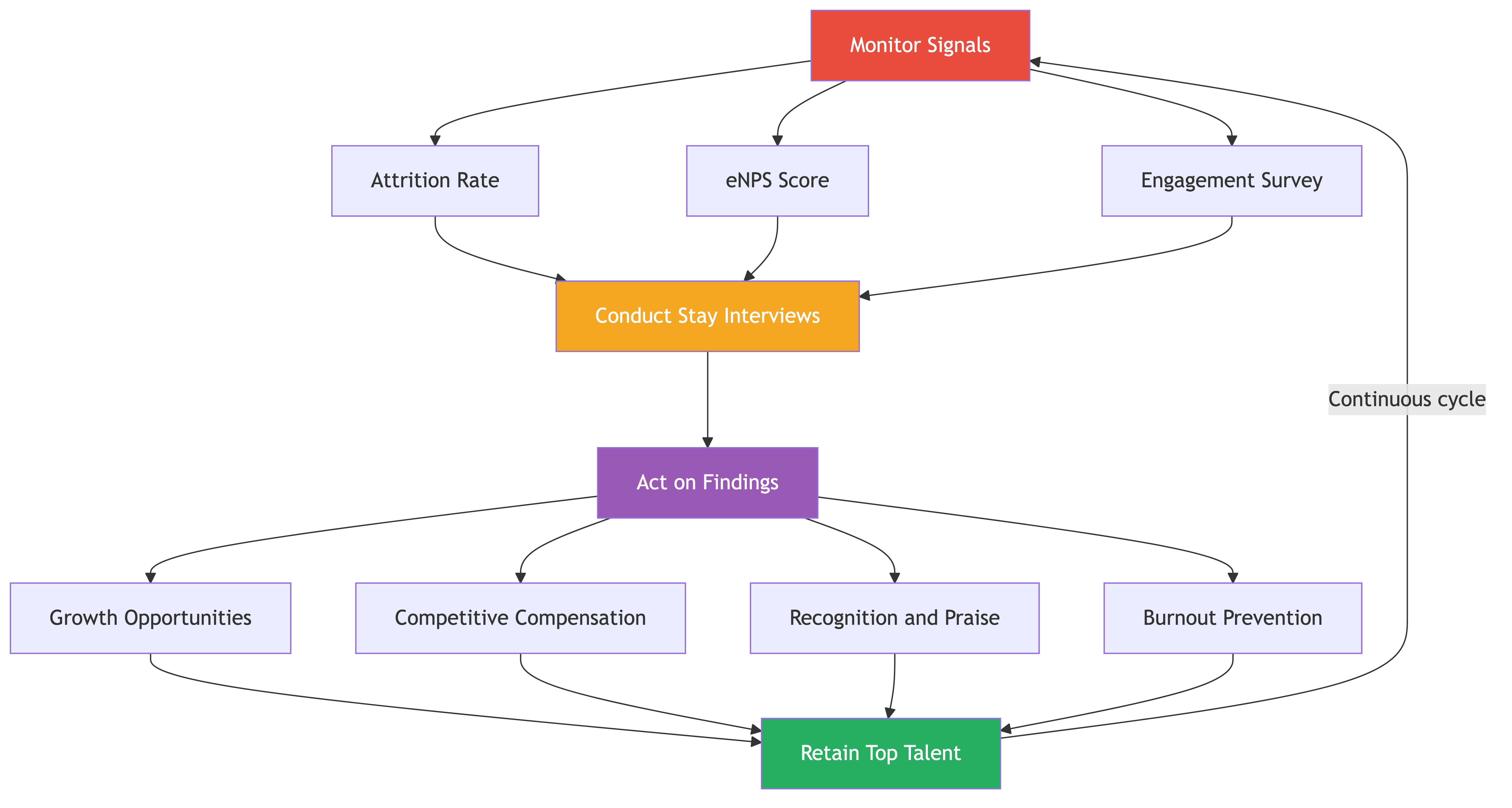
Retention is the single highest-leverage thing you can do for your team's performance, and most managers don't think about it until someone is already walking out the door. By then, you've lost. This guide is about being proactive — keeping your best people before they ever start looking.
Why Retention Matters
Let's start with cold, hard numbers. Replacing an engineer costs somewhere between 50% and 200% of their annual salary. For a senior engineer making 100K to $400K gone. And that's the conservative estimate.
Here's where that cost comes from:
- Recruiting fees and recruiter time. Internal or external, sourcing is expensive.
- Interview hours. Every engineer who interviews a candidate isn't shipping code. Multiply that across five to eight rounds per hire and several candidates per open role.
- Onboarding. A new engineer takes three to six months to reach full productivity. Some studies say twelve months for complex systems.
- Knowledge loss. The person who left had context nobody else has. Decisions they made, systems they understood, relationships they built. Some of that knowledge is just gone forever.
- Team disruption. When someone leaves, the remaining team absorbs their work, their on-call shifts, their code reviews. Morale drops. Others start questioning whether they should leave too.
- Hiring time. The role sits open for weeks or months. The team runs understaffed the whole time.
Retention is almost always cheaper than replacement. A 200K in replacement costs plus six months of reduced output.
Think of retention like maintenance on a machine. It's boring, it's ongoing, and nobody notices when you do it well. But skip it, and everything breaks at once.
Why People Leave
People quit their jobs for a handful of reasons, and most of them are entirely within your influence as a manager. Here are the big ones:
No growth. This is the number one reason engineers leave. They feel stuck. The work stopped being challenging six months ago. There's no promotion in sight. They've learned everything they're going to learn here. When someone feels like they've plateaued, they start browsing job listings.
Bad manager. That's you. The old saying is true: people don't leave companies, they leave managers. If you're not giving clear feedback, if you're micromanaging, if you're not advocating for your team, you are the reason people leave.
Below-market compensation. Engineers talk. They know what the market is paying. If you're 20% below market and haven't addressed it, they'll find someone who will.
No impact. Engineers want to build things that matter. If they're grinding on tickets that never ship, or their work keeps getting deprioritized, or they can't see how what they do connects to something real, they'll go somewhere their work matters.
Burnout. Sustained overwork, constant firefighting, unreasonable on-call, no boundaries. People burn out and leave. Or worse — they burn out and stay, becoming disengaged and pulling the team down.
Better opportunity. Sometimes a genuinely great opportunity shows up. A chance to work on something they're passionate about, a meaningful title jump, a startup with real potential. You can't always compete with this, but you can make sure you're not making it an easy decision.
Toxic culture. Politics, lack of psychological safety, favoritism, exclusion. If people dread coming to work because of the environment, they'll find a healthier one.
Here's the important part: most of these are preventable. Growth, management quality, compensation, impact, burnout, culture — you have direct influence over all of them. If you're losing people to these reasons, that's a signal to look in the mirror.
Attrition Tracking
You can't manage what you don't measure. Track your attrition rate and understand it at a granular level.
The basics:
- Attrition rate = (number of departures / average headcount) over a period, usually annualized.
- Industry benchmarks for tech are roughly 15-20% annually. If you're above that, you have a problem. If you're well below, you're doing something right — or you're not pushing hard enough on performance management.
Break it down further:
- Voluntary vs. involuntary. Voluntary means they chose to leave. Involuntary means you managed them out, did a layoff, or ended a contract. These are very different problems.
- Regrettable vs. non-regrettable. A low performer leaving after a PIP is non-regrettable attrition. Your top engineer getting poached by a competitor is regrettable. This distinction matters enormously. If your regrettable attrition is high, you're bleeding talent.
What to track and watch for:
- Attrition by tenure. Are you losing people in their first year? That's an onboarding or hiring problem. Are you losing people at the two to three year mark? That's a growth problem.
- Attrition by level. Losing mostly seniors? You might have a compensation or challenge gap. Losing mostly juniors? Might be a mentorship or culture issue.
- Attrition trends over time. A spike after a reorg, a bad quarter, or a leadership change tells you something.
Talk to your People/HR partner about getting this data if you don't already have it. Build a simple spreadsheet if you have to. The point is to see the patterns before they become crises.
Stay Interviews
Most companies do exit interviews. By then, it's too late. The person has already decided to leave, they've already accepted another offer, and their feedback — however honest — is retrospective.
Stay interviews are the proactive version. You ask the questions before someone is headed for the door.
Questions to ask regularly (in 1:1s, quarterly check-ins, or dedicated conversations):
- "What keeps you here? What do you enjoy most about your work right now?"
- "What's one thing that frustrates you that, if it changed, would make a big difference?"
- "Is there anything that might make you consider leaving?"
- "Do you feel like you're growing? What would help you grow more?"
- "Do you feel fairly compensated?"
- "Is there a project or role you'd love to take on that you haven't had the chance to?"
How to make these work:
- Don't make it weird. Weave these into regular conversations. You don't need a formal "stay interview" meeting on the calendar.
- Actually act on the feedback. If someone tells you they want more technical challenge and you do nothing, the next conversation they have will be with a recruiter.
- Build trust first. People will only be honest if they believe you won't punish them for it. If someone says "I've been thinking about leaving," your response should be curiosity, not panic.
- Watch for body language and energy shifts. Sometimes people won't say they're unhappy. They'll just get quieter, contribute less in meetings, stop volunteering for things. Those are signals too.
Pulse checks at the team level:
Run anonymous surveys occasionally. Keep them short — five questions max. Look for trends. If multiple people say they don't feel recognized, or that workload is unsustainable, that's a systemic issue you need to address.
Compensation Conversations
Compensation is not the top reason people leave, but it's a prerequisite. If someone feels underpaid, no amount of interesting work or great culture will keep them forever.
Know the market.
- Use tools like levels.fyi, Glassdoor, Blind, and compensation surveys your company may subscribe to.
- Talk to your recruiting partners about what offers are going out and what candidates are expecting.
- Understand your company's compensation bands and where each of your reports falls within them.
Be proactive.
- Don't wait for someone to come to you with a competing offer. By that point, they've already mentally checked out and gone through the emotional process of deciding to leave.
- Review comp for your team at least twice a year. If someone is significantly below market or below band, escalate it.
- Advocate loudly for your team in compensation review cycles. Come with data, not just feelings. "Sarah is in the 25th percentile of our band for her level, and here's the market data showing she's 15% below comparable roles."
How to have the conversation:
- Be transparent about what you can and can't do. "I've advocated for a raise for you. Here's where we are in the process."
- If you can't fix comp immediately, be honest about the timeline and what you're doing about it.
- Never promise what you can't deliver. "I'll try" is better than "You'll get a raise next quarter" if you're not sure.
- If someone brings up a competing offer, listen calmly. Ask what they want. Don't get defensive. But also be honest about what's realistic.
Equity matters too. Pay equity across your team is just as important as market rates. If two people at the same level are doing comparable work and one is paid 20% less, you have a problem — and eventually, they'll find out.
Career Growth as Retention
This is the single most important retention lever you have. People stay where they're growing. They leave where they're stagnating.
This connects directly to career development and mentorship work you should already be doing (reference guide 04 in this series). Here's the retention-specific lens:
Make the path forward visible. Every person on your team should be able to answer the question: "What's next for me here?" If they can't, you haven't done your job. That doesn't mean promising a promotion — it means showing them what growth looks like and helping them get there.
Invest in skill development. Stretch assignments, conference attendance, learning budgets, time for exploration. These things cost relatively little compared to replacing someone.
Match work to ambition. If someone wants to move into architecture and you keep assigning them bug fixes, they'll find architecture work somewhere else. Align the work with where they want to go whenever possible.
Have explicit growth conversations. At least quarterly, sit down and talk about their career trajectory. Not just performance — trajectory. Where do they want to be in a year? In three years? What skills do they need to develop? What opportunities can you create?
Internal mobility. Sometimes the best thing for retention is helping someone move to a different team within the company. Losing them from your team isn't great, but losing them from the company is worse. Be generous. Managers who hoard talent end up losing it entirely.
Recognition and Appreciation
This one is almost embarrassingly simple, and yet most managers under-do it. People leave when they feel invisible. They stay when they feel valued.
Make recognition specific. "Great job" is nice but forgettable. "The way you refactored the payment service to handle the new tax rules — that was technically impressive and it unblocked the whole team" is something people remember for years.
Make it public when appropriate. Call out wins in team meetings, in Slack channels, in all-hands. Some people prefer private recognition, so know your audience. But most engineers appreciate having their work seen by others.
Celebrate wins, even small ones. Shipped a tricky feature? Mention it. Handled a gnarly incident well? Thank them publicly. Mentored a junior teammate through a tough problem? Acknowledge it.
Connect effort to impact. "Your work on the caching layer reduced p99 latency by 40%, which directly improved conversion rates." When people see their work mattering, they want to do more of it.
Peer recognition. Create channels or rituals where teammates can recognize each other. This builds culture and takes some of the burden off you.
Recognition is free. It takes five minutes. And it is genuinely one of the most powerful retention tools you have. If you're not doing it regularly, start today.
Preventing Burnout
Burned-out engineers either leave or — and this is arguably worse — they stay and disengage. They do the minimum, they stop caring, they become a drag on the team's energy. Preventing burnout is a retention strategy and a performance strategy.
Sustainable pace. Sprints should not feel like sprints. If your team is regularly working evenings and weekends, something is wrong with planning, staffing, or prioritization. Fix the system, not the people.
Reasonable on-call. On-call rotations that are too frequent or too noisy burn people out fast. If someone is getting paged every night, that's a system reliability problem, not a people problem. Invest in fixing the root causes.
Encourage real vacation. Not "vacation where you check Slack." Actual, disconnected time off. Model it yourself. If you're emailing people during your vacation, you're telling them they can't actually disconnect during theirs.
Manage workload actively. Watch for people who always say yes. They're the ones most at risk. Protect them by helping them say no or by redistributing work.
Watch for the signs: declining quality of work, irritability, cynicism, withdrawal from team activities, decreased participation in discussions, working odd hours consistently. These aren't character flaws — they're symptoms of an unsustainable situation.
Have the conversation early. "I've noticed you seem stretched thin. How are you doing, really?" is a question that can prevent a resignation three months from now.
When Someone Gets a Counter-Offer
It's going to happen. Someone on your team will come to you and say they have an offer from another company. Here's how to handle it.
Stay calm. Don't panic, don't guilt-trip, don't get angry. Listen. Ask what's driving the decision. Often, the other offer is the catalyst, not the cause.
Understand the real motivation. Is it about money? Growth? A specific opportunity? Frustration with something here? The answer determines your response. Sometimes the money is just the excuse — the real issue is that they feel stuck or undervalued.
Be honest about what you can offer. If you can match or improve their situation, say so. If you can't, say that too. Don't make promises you can't keep just to buy time.
The hard truth about counter-offers: Research consistently shows that people who accept counter-offers leave within 12-18 months anyway. The underlying issues that made them look in the first place usually haven't changed. The relationship has shifted — they know you know they were looking, and you know they're willing to leave.
Prevention is better than countering. If you're doing everything else in this guide well — growth conversations, fair comp, recognition, burnout prevention — you'll rarely find yourself in a counter-offer situation. And when someone does leave, you'll know it's because of something genuinely outside your control.
When you can't keep them: Be gracious. Thank them for their contributions. Make the transition smooth. Ask for honest feedback. They might come back someday — and if they do, they'll remember how you handled their departure.
Real-World Examples
The EM Who Kept Attrition Near Zero for Two Years
Maria managed a platform team of eight engineers. Over two years, she lost zero regrettable attrition. Not because she got lucky — because she was relentlessly proactive.
Every quarter, she reviewed compensation for her team against market data. She flagged two engineers who were falling behind and pushed for mid-cycle adjustments, getting both approved before they ever had a reason to look externally.
She had explicit career conversations with every report, each with a written growth plan that they revisited monthly. When one of her seniors wanted to move toward management, she created a tech lead role with mentoring responsibilities as a trial. When another wanted to go deeper into distributed systems, she advocated for them to lead the team's most complex project.
She ran weekly team retrospectives — not just about the sprint, but about how people were feeling about the work. She caught burnout early in one engineer and temporarily reduced their scope while they recovered.
The result: a stable, high-performing team that other teams wanted to transfer into. Her secret wasn't magic. It was consistent, proactive attention to the things that make people want to stay.
The Team That Lost Three Senior Engineers in Six Months
David inherited a team of ten. Within his first six months, three senior engineers resigned. The damage was severe — the team lost critical knowledge of their core system, two junior engineers were left without mentors, and remaining team members started updating their resumes.
The postmortem revealed a chain of failures. The previous manager had ignored compensation gaps for over a year. Two of the departing engineers were 25% below market. Growth conversations hadn't happened — all three said in their exit interviews that they didn't see a path forward. On-call was brutal, with one engineer averaging four pages per week for months.
David stabilized by immediately addressing comp for the remaining team, restructuring on-call, and having honest conversations with everyone about what had gone wrong and what he was going to do about it. It took almost a full year to recover — hiring replacements, rebuilding knowledge, restoring trust. The total cost was estimated at over $800K when you factor in recruiting, lost productivity, and the months of operating understaffed.
The lesson: retention problems compound. Losing one person is expensive. Losing three triggers a cascade that can take a year to recover from.
The Successful Retention Conversation
Priya, a staff engineer, asked her manager James for a private meeting. She said she'd been approached by a late-stage startup offering a significant equity package and a VP of Engineering title.
James didn't panic. He asked what appealed to her about the opportunity. Priya said she wanted more scope and impact — she felt like she was doing her best work but it wasn't being recognized at a company level.
James acknowledged the gap. He didn't try to match the title or the equity. Instead, he was honest: "I can't offer you a VP title here. But I think the scope you're looking for is something we can create." Over the next two weeks, he worked with his director to carve out a new technical leadership area for Priya — ownership of the company's API platform strategy, with direct visibility to the CTO.
He also pushed through a compensation adjustment that brought her to the top of her band. It wasn't the startup equity package, but combined with the scope increase and reduced risk, it was compelling.
Priya stayed. Two years later, she was promoted to Principal Engineer and was leading one of the company's most important technical initiatives. The startup she'd been considering had pivoted twice and done a round of layoffs.
The lesson: the best retention conversations aren't about matching an offer. They're about understanding what someone needs and finding creative ways to provide it.
Common Mistakes
Only reacting to resignations. By the time someone tells you they're leaving, you've already lost. Retention is proactive work. If your entire retention strategy is counter-offers, you'll always be behind.
Ignoring compensation. "We can't control comp" is a cop-out. You can research market rates, advocate in comp cycles, escalate gaps to your leadership. You might not always succeed, but you need to try — and your team needs to know you're trying.
Not having growth conversations. Assuming that people know they're valued, that they can see their path forward, that they understand the opportunities available to them. They can't. You need to make it explicit, regularly.
Assuming people are happy because they're quiet. Your highest-performing, lowest-maintenance engineer is often the one most at risk. They don't complain because they've decided complaining won't help. One day they just resign, and you're blindsided. Check in with everyone, not just the squeaky wheels.
Treating everyone the same. Different people are motivated by different things. One engineer wants more money. Another wants harder problems. Another wants mentorship opportunities. Another wants better work-life balance. If your retention strategy is one-size-fits-all, it won't fit anyone well.
Waiting too long on performance issues. This sounds counterintuitive for a retention guide, but keeping low performers too long drives away your high performers. A-players don't want to work alongside people who aren't pulling their weight. Healthy attrition is part of healthy retention.
Ignoring the team environment. You can do everything right for individuals and still lose people if the team culture is toxic, if there's unresolved conflict, or if people don't enjoy working together. Team health is a retention factor.
Business Value
Let's make the math concrete so you can make the case to your leadership when you need budget for retention efforts.
Replacement cost math:
| Cost Category | Conservative | Realistic |
|---|---|---|
| Recruiting (fees, sourcing, coordination) | $15,000 | $40,000 |
| Interview time (engineering hours) | $5,000 | $15,000 |
| Onboarding and ramp-up (reduced productivity) | $30,000 | $80,000 |
| Knowledge transfer gaps | $10,000 | $50,000 |
| Team disruption and morale impact | $10,000 | $30,000 |
| Total per departure | $70,000 | $215,000 |
For a senior engineer making 215K is just over 100% of salary. For specialized roles (ML, infrastructure, security), it can go much higher.
Productivity continuity. A stable team that's worked together for two or more years is dramatically more productive than a team with constant churn. They know the codebase, they know each other's strengths, they've built trust and working rhythms. Every departure resets part of that. A team with 30% annual attrition is essentially rebuilding itself every three years.
Knowledge preservation. Some knowledge only exists in people's heads. Architectural decisions, historical context about why something was built a certain way, relationships with stakeholders in other teams. Documentation helps but never captures everything. When a long-tenured engineer leaves, you lose a piece of organizational memory that can't be recovered.
The compound effect. Retention problems don't add — they multiply. When one person leaves, the remaining team absorbs their work and their on-call. They get stretched thinner. They start thinking about leaving too. You lose another person. The cycle accelerates. This is why teams that start losing people often lose several in quick succession.
The retention ROI. A 20K. A team offsite to boost morale and connection: 5K per person. Compare that to $215K per replacement, and the math is overwhelming. Retention investments have some of the highest ROI of anything you can spend on.
Summary
Retention isn't a crisis response. It's an ongoing discipline. The managers who keep their best people aren't doing anything magical — they're just paying attention. They know what their people want. They advocate for fair compensation. They create growth opportunities. They recognize good work. They prevent burnout before it starts. They have honest conversations early and often.
Do those things consistently, and you won't be scrambling to counter-offer when your best engineer walks into your office with a resignation letter. They won't want to leave in the first place.
Common Pitfalls
- Only reacting to resignations instead of being proactive. By the time someone tells you they are leaving, you have already lost. If your entire retention strategy is counter-offers, you will always be behind the curve and spending far more than prevention would have cost.
- Assuming people are happy because they are quiet. Your highest-performing, lowest-maintenance engineer is often the one most at risk. They do not complain because they have decided complaining will not help. One day they simply resign, and you are blindsided.
- Ignoring compensation gaps until someone has an outside offer. Waiting for a competing offer to trigger a comp review means the engineer has already mentally checked out, gone through the emotional process of deciding to leave, and shifted their loyalty. Proactive comp reviews are dramatically cheaper than reactive counter-offers.
- Not having regular growth conversations. Assuming that people can see their path forward, know they are valued, and understand the opportunities available to them without you making it explicit. They cannot. You need to make it clear, regularly.
- Treating everyone the same with a one-size-fits-all retention strategy. Different people are motivated by different things — money, harder problems, mentorship opportunities, work-life balance. A generic approach will not fit anyone well enough to keep your best people.
- Keeping low performers too long. This sounds counterintuitive for retention, but A-players do not want to work alongside people who are not pulling their weight. Healthy attrition of underperformers is part of healthy retention of your top talent.
Key Takeaways
- Retention is the single highest-leverage thing you can do for team performance. Replacing an engineer costs 50-200% of their annual salary, and the compound effects of turnover — knowledge loss, team disruption, morale impact — make the true cost even higher.
- The top reasons engineers leave — lack of growth, bad management, below-market comp, no impact, burnout, toxic culture — are almost all within your direct influence as a manager.
- Track attrition at a granular level: voluntary vs. involuntary, regrettable vs. non-regrettable, by tenure, by level, and over time. The patterns tell you where to invest.
- Stay interviews are the proactive version of exit interviews. Ask regularly what keeps people, what frustrates them, and what might make them consider leaving — then act on what you hear.
- Career growth is the single most important retention lever. Every person on your team should be able to answer "what is next for me here?" If they cannot, you have not done your job.
- Recognition is free, takes five minutes, and is one of the most powerful retention tools available. Make it specific, connect effort to impact, and do it regularly.
- Burnout prevention is both a retention strategy and a performance strategy. Sustainable pace, reasonable on-call, real vacation, and active workload management protect your team from the slow erosion that drives departures.
- Retention problems compound. Losing one person is expensive. Losing three in quick succession triggers a cascade that can take a year to recover from. Invest in prevention before the crisis.