
Team Culture & Engagement
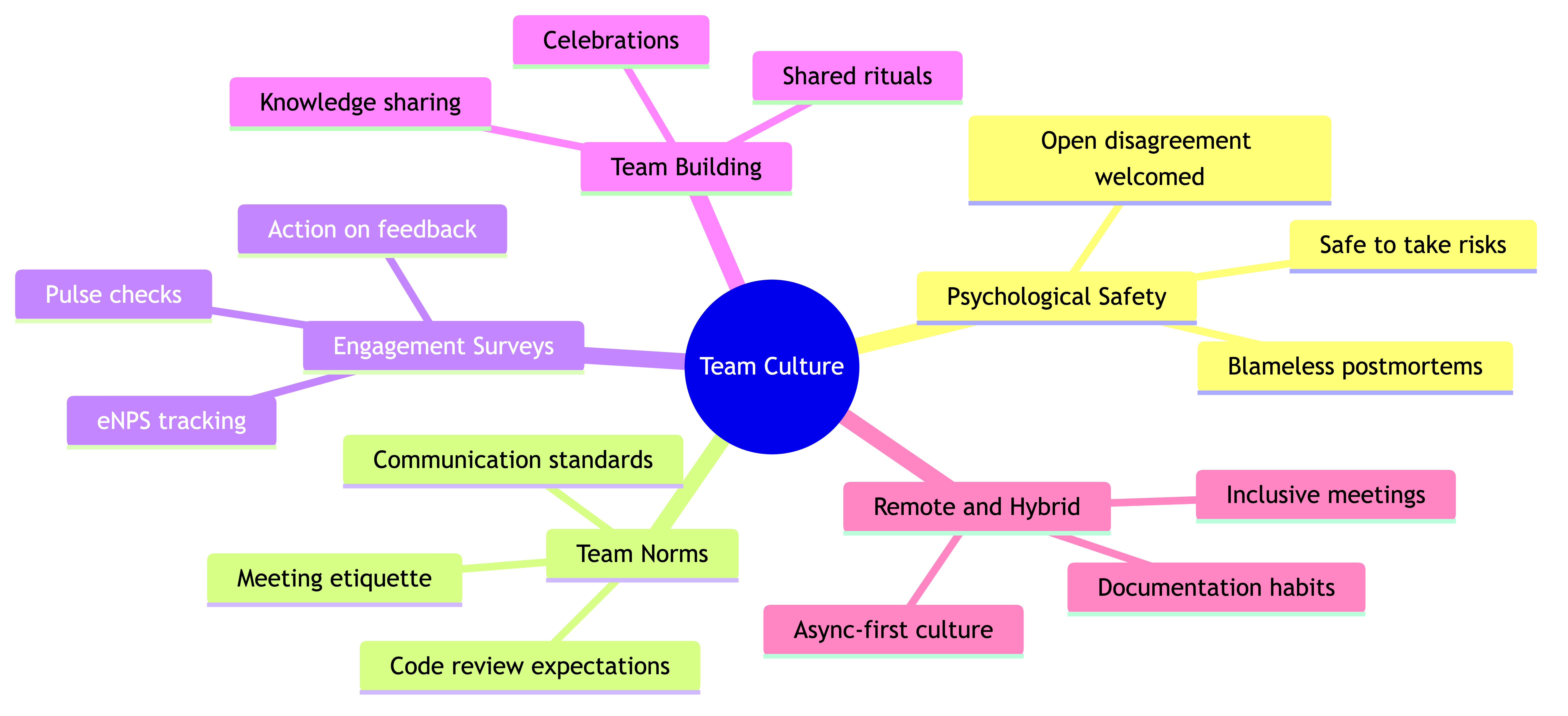
Why This Matters
Let me be blunt: culture is the single biggest lever you have as an engineering manager. It's bigger than your tech stack, your sprint process, or your hiring bar. An engaged team with strong culture will outship, outinnovate, and outlast a disengaged team every single time.
The data backs this up. Gallup's research consistently shows that highly engaged teams are roughly twice as productive as disengaged ones. They ship more. They ship better. They stay longer. They recruit their friends. They solve harder problems because they actually care.
And here's what nobody tells you early enough: culture is your job. Not HR's job. Not the CEO's job. Yours. You are the person closest to your team, and you set the tone every single day through what you say, what you do, and — most importantly — what you let slide.
1. Culture Is What You Tolerate
Forget the mission statement on the wall. Forget the company values printed on the back of your badge. Culture is not aspirational. Culture is behavioral. It's the sum total of what actually happens day to day on your team.
Here's the formula that actually defines your culture:
- What you reward — people do more of it.
- What you ignore — people assume it's acceptable.
- What you punish — people stop doing it.
That's it. That's your culture. Every single day you are shaping it, whether you realize it or not.
If you say "we value work-life balance" but promote the person who works weekends and never say anything to the person sending 11pm Slack messages to the team, your actual culture is "overwork gets rewarded." If you say "we value quality" but consistently let deadline pressure override code review standards, your actual culture is "ship it and pray."
The hard part is that tolerating bad behavior even once sends a signal. When a senior engineer is dismissive in code reviews and you don't address it, every junior engineer on the team learns that dismissiveness is fine here. When someone takes credit for a teammate's work and you let it go, everyone learns that collaboration is a sucker's game.
You shape culture in the small moments. The offhand comment you correct or don't. The meeting behavior you call out or don't. The quality standard you enforce or don't. These micro-decisions compound into your team's actual culture over weeks and months.
Practical exercise: Write down your team's stated values. Now write down what behaviors actually get rewarded on your team. Compare the two lists. The gap between them is your culture debt.
2. Psychological Safety
Google's Project Aristotle studied hundreds of teams to figure out what made some teams dramatically more effective than others. They looked at team composition, individual intelligence, seniority, co-location — none of it mattered as much as one factor: psychological safety.
Psychological safety means that people on the team feel safe to:
- Take risks without fear of being punished for failure
- Ask questions without being seen as ignorant
- Admit mistakes without it being held against them
- Challenge ideas without being labeled as difficult
- Propose new approaches without being shut down
This is not about being "nice." It's not about avoiding hard conversations or lowering your standards. In fact, the opposite is true. Psychologically safe teams have harder conversations because people aren't afraid to speak up. They hold higher standards because people feel safe pointing out problems.
Think about it from an engineer's perspective. If you're on a team where admitting you don't understand something gets you eye rolls, what do you do? You nod along. You pretend. You build on top of something you don't understand. And eventually it breaks in production at 2am.
If you're on a team where asking "Can someone walk me through this?" gets a genuine, helpful response, you ask. You learn. You build something solid. And you catch problems before they ship.
The absence of psychological safety is incredibly expensive. Bugs that could have been caught in design review ship because nobody felt safe questioning the senior engineer's approach. Outages last longer because people are afraid to escalate. Talented people leave because they're tired of walking on eggshells.
3. Building Psychological Safety
Psychological safety doesn't happen by accident. You build it deliberately, and you build it primarily through your own behavior. Your team watches you constantly — how you react to bad news is the single biggest signal you send.
Model Vulnerability
Go first. Admit when you don't know something. Say "I was wrong about that" in front of the team. Share a time you made a mistake and what you learned. When you — the person with positional authority — show that it's safe to be imperfect, everyone else gets permission to do the same.
This doesn't mean performing weakness or being self-deprecating. It means being genuinely honest. "I don't have enough context to make this call — what am I missing?" is powerful. "I thought our approach to the migration was solid, but looking at these metrics, I think I was wrong. What should we do differently?" is powerful.
Respond Well to Bad News
This is where most managers blow it. Someone comes to you and says "I think I introduced a bug that's affecting 10% of users." Your reaction in that moment defines your culture.
If you sigh, look frustrated, and say "How did this get through code review?" — congratulations, that's the last time anyone proactively tells you about a problem. They'll hide things. They'll hope nobody notices. They'll let small problems become big ones.
If you say "Thanks for catching this. Let's figure out the impact and fix it. Then we can talk about what we can change so this doesn't happen again" — you've just reinforced that catching and reporting problems is valued. People will keep doing it.
The rule: Thank first, fix second, learn third. Never punish the messenger.
Celebrate Learning from Failure
Run blameless postmortems and mean it. When something goes wrong, the question is "What did we learn?" and "What can we change?" — never "Whose fault was this?" Share postmortems openly. Highlight the learnings. Make it clear that failure plus learning equals progress.
Some teams I've seen do "failure Fridays" where people share something that didn't work and what they learned. Others include a "what I learned this week" section in standups. The format doesn't matter — the message does: learning from mistakes is celebrated here.
Never Punish Honest Mistakes
There's a difference between an honest mistake (someone made a judgment call that turned out wrong, or missed something despite reasonable effort) and negligence (someone ignored known processes or didn't care). Honest mistakes are learning opportunities. Negligence is a performance conversation.
If you punish honest mistakes — through negative feedback, reduced trust, or public embarrassment — you train people to play it safe. They'll stop taking risks. They'll stop innovating. They'll do the bare minimum because the downside of trying something new is too high.
4. Team Norms and Working Agreements
Every team has norms. The question is whether yours are explicit and intentional, or implicit and accidental.
Implicit norms are dangerous because everyone has a different interpretation. One person thinks "respond to Slack quickly" means within 5 minutes. Another thinks it means within a few hours. Neither is wrong — they're just operating on different assumptions, and that creates friction.
Make your norms explicit. Write them down. Revisit them regularly. Here are the areas that benefit most from clear working agreements:
Meeting Norms
- Do meetings have agendas? Always, sometimes, for which types?
- Is it okay to decline meetings? Under what circumstances?
- Cameras on or off for video calls?
- How do you handle someone who consistently runs over time?
- What's the default meeting length? (Consider making it 25 or 50 minutes instead of 30 or 60.)
Communication Expectations
- What's the expected response time for Slack vs. email vs. a direct mention?
- When is it appropriate to send a message outside working hours? What's the expectation for responding?
- What goes in Slack vs. email vs. a document vs. a ticket?
- How do you signal urgency vs. "whenever you get to it"?
Code Review Etiquette
- What's the expected turnaround time for a code review?
- What's the tone expectation? (Suggest changes vs. demand changes. Ask questions vs. make statements.)
- How do you handle disagreements in review?
- What's the bar for approval? Does every comment need to be addressed?
On-Call and Incident Response
- What's the expected response time for pages?
- How does the team handle on-call during holidays or personal events?
- What's the compensation or time-off policy for after-hours incidents?
- How are postmortems run?
How to Build These
Don't hand your team a document and say "here are our norms." That's a policy, not an agreement. Instead:
- Facilitate a conversation. Set aside time (a retro works well) to discuss each area.
- Let the team decide. Your job is to facilitate, not dictate. People follow norms they helped create.
- Write them down. Put them somewhere visible — a team wiki page, a pinned Slack message, whatever works.
- Revisit regularly. Norms should evolve. Check in every quarter: "Is this still working for us?"
- Enforce them. Norms that aren't enforced aren't norms. If someone consistently violates a working agreement, address it.
5. Measuring Engagement
You can't improve what you don't measure, but you also can't survey people to death. Finding the right balance is important.
Health Surveys
Short, regular pulse surveys (5-7 questions, monthly or bi-monthly) are more useful than long annual surveys. By the time you get annual survey results, analyze them, and act on them, six months have passed and the context has changed.
Good pulse survey questions:
- "I would recommend this team as a great place to work." (Strongly disagree to strongly agree)
- "I feel safe taking risks on this team."
- "I have the tools and resources I need to do my job well."
- "I feel like my work matters."
- "I see a path for my growth here."
Keep it anonymous. Keep it short. And — this is critical — act on the results and close the loop. Nothing kills survey participation faster than feeling like your feedback disappeared into a void. Share the results with the team. Pick one or two things to work on. Report back on progress.
eNPS (Employee Net Promoter Score)
One question: "On a scale of 0-10, how likely are you to recommend this team/company as a place to work?" Promoters (9-10) minus detractors (0-6) gives you your eNPS. It's a useful trend line. Don't obsess over the absolute number — watch whether it's going up or down over time.
Skip-Level Conversations
Talk to your team members' peers or, if you manage managers, talk to the ICs directly. These conversations surface things that don't come up in surveys. People will tell you things in a 1-on-1 conversation that they won't write in a survey, especially if they trust you.
Ask open-ended questions: "What's working well on the team?" "What's frustrating?" "Is there anything you wish were different?" Then listen. Really listen.
Attrition Data
Track who's leaving and why. Exit interviews are somewhat useful, but people rarely give the full truth on their way out. More useful: track regrettable vs. non-regrettable attrition. If your best people are leaving, that's a five-alarm fire regardless of what your survey scores say.
Avoiding Survey Fatigue
- Keep surveys short (under 5 minutes to complete)
- Don't survey more often than monthly
- Always share results and actions taken
- Rotate questions so it doesn't feel repetitive
- Supplement surveys with conversations — not everything needs to be a form
6. Signs of Disengagement
By the time someone tells you they're disengaged, it's often too late. Your job is to catch the early warning signs. Here's what to watch for:
Quiet Quitting
The person is doing the minimum. They hit their deliverables but offer nothing extra — no ideas, no volunteering for new projects, no going beyond what's strictly required. They used to be proactive; now they're reactive. This is often the first sign, and it's easy to miss because technically nothing is "wrong."
Reduced Participation
They stop talking in meetings. They used to ask questions, challenge ideas, offer suggestions — now they're silent. In retros, they say "nothing" when asked what could be better. They respond to Slack messages but don't initiate conversations.
Cynicism
Comments like "It doesn't matter what we think" or "They're going to do what they want anyway" or "Why bother, it'll just get deprioritized." A little healthy skepticism is fine — persistent cynicism is a warning sign that someone has lost faith in the team or the organization.
Increased PTO or Irregular Hours
Suddenly taking a lot more time off, or shifting their hours to minimize overlap with the team. Sometimes this is just life circumstances — but combined with other signals, it can indicate someone who's checking out or interviewing.
Less Initiative
They used to pick up stretch tasks, mentor junior engineers, improve the build pipeline on the side. Now they only do assigned work. The discretionary effort has evaporated.
What to Do
When you spot these signs, don't ignore them and don't panic. Have a private, caring conversation. Not "I've noticed you're disengaged" — that puts people on the defensive. Instead: "Hey, I wanted to check in. How are things going for you? Is there anything on your mind?" Create space for honesty. Sometimes the issue is something you can fix (boring work, lack of growth, interpersonal conflict). Sometimes it's something outside of work. Sometimes they've already decided to leave. But you'll never know if you don't ask.
The key insight: disengagement is usually a symptom, not a root cause. Find the root cause.
7. Team Building That Actually Works
Let me save you some pain: mandatory fun doesn't work. Forced happy hours, awkward icebreakers, and trust falls make most engineers want to crawl out of their skin. If your team building feels like a chore, it's doing more harm than good.
What actually works is shared experiences that create genuine connection. Here's what I've seen work well with engineering teams:
Hackathons
Give the team a day (or two) to work on whatever they want. The only rule: demo it at the end. Hackathons work because they tap into intrinsic motivation — engineers get to solve a problem they care about, learn something new, and show it off. The side effect is bonding. People who build something together develop a connection that no happy hour can replicate.
Collaborative Problem-Solving
Architecture reviews, design sessions, incident response — these are natural team-building activities. When people work together to solve a hard problem, they build trust and respect. Lean into this. Make these collaborative moments more frequent and more inclusive.
Celebrating Wins
When the team ships something, celebrate it. Not with a generic "good job" Slack message — with genuine recognition. Call out specific contributions. Share the impact with the wider org. Let people feel proud of what they built. A team that celebrates together builds identity together.
Informal Social Time
The key word is optional. Lunch together, coffee chats, a game channel in Slack, an optional Friday afternoon hangout. Make it available but never mandatory. Different people socialize differently, and that's fine.
Learning Together
Book clubs, tech talks, conference watch parties, pair programming rotations. Learning together creates connection and shared growth. It also signals that the team values development.
What to Avoid
- Mandatory attendance — the moment it's required, it's work, not bonding
- Activities that exclude — alcohol-centric events, physically demanding activities, anything that makes a subset of the team uncomfortable
- One-size-fits-all — some people are introverts. Some have family commitments. Offer variety
- Frequency over quality — one genuinely fun event per quarter beats a forced weekly happy hour
8. Remote/Hybrid Culture
Building culture in a remote or hybrid environment is harder. Not impossible — but it requires more intentionality. You can't rely on the hallway conversations and lunch runs that build culture organically in an office.
Async-First Communication
If you have team members in different time zones, synchronous communication can't be your default. Build an async-first culture:
- Write things down. Decisions, context, rationale. If it's not documented, it didn't happen for your async teammates.
- Record meetings so people who can't attend live can catch up.
- Use async tools well. Detailed PR descriptions, Loom videos for walkthroughs, written RFCs for design decisions.
- Don't make presence a proxy for productivity. Judge output, not online status.
Intentional Social Time
In an office, social connection happens accidentally — you bump into someone in the kitchen, you overhear a conversation, you grab lunch with whoever's around. Remote teams need to create these moments deliberately:
- Virtual coffee chats. Pair random team members for a 15-minute chat every week or two. Tools like Donut in Slack can automate this.
- Non-work Slack channels. Pets, hobbies, cooking, gaming. Let people be human.
- Team offsites. If budget allows, bring the team together in person once or twice a year. This in-person time pays dividends for months afterward.
Inclusive Practices for Remote Team Members
In a hybrid setup, remote members often become second-class citizens. Fight this actively:
- If one person is remote, everyone is remote. Even if most of the team is in the office, everyone joins the meeting from their own laptop so remote participants have an equal experience.
- Rotate meeting times if the team spans time zones. Don't always make the same person take the 7am or 9pm call.
- Document decisions made in hallway conversations. If you hash something out in person, write it up and share it with the team so remote members aren't blindsided.
- Be mindful of time zone gaps in on-call rotations. Don't burden remote team members with unfair on-call schedules just because their hours are "different."
Building Identity Remotely
Remote teams need something to coalesce around. A team name, shared rituals (weekly demos, monthly retros, a specific way you celebrate launches), inside jokes that develop naturally over time. These small things create the "we" that makes a group of individuals feel like a team.
9. Real-World Examples
Scenario 1: Strong Culture Weathers a Crisis
A platform team at a mid-stage startup had spent eighteen months building strong psychological safety and clear working agreements. When a critical data migration went sideways — corrupting records for about 5% of their user base — the culture they'd built kicked in.
The engineer who first noticed the issue escalated immediately. No hesitation, no trying to fix it quietly. The team swarmed without being asked. The on-call engineer pulled in specialists. People communicated clearly and calmly. They ran a blameless postmortem within 48 hours.
The total downtime was under four hours. The postmortem identified three systemic improvements. Nobody got blamed. The engineer who caused the issue was the one who wrote the postmortem and proposed the fixes, and the team thanked them for it.
This didn't happen because these were extraordinary engineers. It happened because the culture made the right behaviors easy and natural. Escalating was safe. Swarming was expected. Learning was valued over blaming.
Scenario 2: Toxic Behavior Tolerated
A backend team had a brilliant senior engineer — technically exceptional, responsible for core architecture decisions, deep institutional knowledge. This person was also a nightmare. Dismissive in code reviews ("Why would you do this?"). Condescending in meetings. Took credit for team accomplishments.
The manager knew about it. Everyone knew about it. But the senior engineer was "too important" to lose, so the behavior was tolerated. For over a year.
The result: three strong mid-level engineers left within eight months. Two of them cited the toxic environment in exit interviews. The remaining team became passive — they stopped pushing back on technical decisions, stopped proposing alternatives, stopped taking risks. Code quality actually declined because people were afraid of review feedback and started taking shortcuts to avoid scrutiny.
When the manager finally addressed the behavior (after the third departure forced a difficult conversation with their director), the senior engineer was defensive and resistant. They eventually left too. The team had to rebuild from a weaker position with less institutional knowledge and a damaged reputation that made hiring harder.
The lesson: the cost of tolerating toxic behavior is always higher than the cost of addressing it. Always. That "irreplaceable" person is never worth the damage they do to everyone else.
Scenario 3: Culture Rebuild After a Bad Period
A mobile engineering team went through a rough stretch — a reorg, a manager change, a death march to hit an unrealistic deadline that resulted in significant tech debt and burnout. Engagement survey scores cratered. Two people left. Morale was in the basement.
The new manager didn't try to fix everything at once. They started with the basics:
Month 1: Listened. Had 1-on-1s with every team member. Asked "What's broken?" and wrote it all down without defending the past. Acknowledged that things had been bad. Didn't promise miracles.
Month 2: Picked the two most-cited problems (lack of agency in technical decisions, and unsustainable on-call burden) and fixed them. Gave the team ownership of tech debt prioritization. Restructured on-call so no one was paged more than once a week. Small wins, but visible ones.
Month 3: Introduced working agreements. The team collaboratively defined how they wanted to work together. Meeting norms, code review expectations, communication standards. For the first time in a while, the team felt ownership over something.
Months 4-6: Started a monthly retro focused on team health, not just sprint delivery. Began celebrating wins — small ones, big ones, learning ones. Introduced optional social time.
Six months in, the engagement scores were up significantly. Not back to great, but trending in the right direction. A year in, the team was one of the highest-rated in the org. Two former team members asked to transfer back.
The lesson: culture can be rebuilt, but it takes time, consistency, and prioritizing people over process. You can't shortcut your way to trust.
10. Common Mistakes
Ignoring Culture Entirely
"I'm an engineering manager, not a culture manager." Wrong. Culture is the operating system your team runs on. If you ignore it, you don't get "no culture" — you get an accidental culture that's probably worse than anything you'd design intentionally.
Forcing Fun
Mandatory karaoke nights and awkward icebreakers don't build culture. They build resentment. If people aren't enjoying your team-building activities, the activities are wrong for your team. Ask people what they actually want to do. Or better yet, let them organize it themselves.
Tolerating Toxic Behavior
We covered this in the scenarios above, but it bears repeating. Every day you tolerate toxic behavior, you are choosing that person over everyone else on the team. You are telling your team that this behavior is acceptable. You are damaging trust that takes months to rebuild. Address it early, address it directly, and be willing to follow through on consequences.
Not Measuring
"Our culture is great, everyone seems happy." Is it? Are they? How do you know? Vibes are not data. Measure engagement, track trends, and listen for weak signals. The problems you don't see are the ones that hurt you.
Assuming Culture Is HR's Job
HR can provide tools, run surveys, and offer resources. But culture lives in the day-to-day interactions between a manager and their team. HR can't sit in your standups. HR can't watch how your senior engineer treats the new hire in code review. HR can't notice that someone has gone quiet in meetings. That's your job.
Being Inconsistent
Enforcing norms sometimes but not others. Holding some people accountable but giving others a pass. Saying one thing and doing another. Inconsistency is the fastest way to destroy trust and credibility. Your team will always watch what you do more closely than what you say.
Trying to Fix Everything at Once
If your culture needs work, pick one or two things and focus on those. Trying to overhaul everything simultaneously creates change fatigue and nothing sticks. Small, consistent improvements compound over time.
Business Value
If you need to justify investing time in culture to your leadership (and you shouldn't have to, but reality is reality), here's the business case:
Productivity. Gallup's research shows that highly engaged business units see 18-21% higher productivity. In engineering terms, engaged teams ship more features, close more tickets, and hit more deadlines. The mechanisms are straightforward: engaged people think about problems in the shower, they catch bugs before they ship, they proactively improve systems instead of waiting to be asked.
Retention. Replacing an engineer costs 50-200% of their annual salary when you factor in recruiting, onboarding, ramp-up time, and the productivity drag on the rest of the team. Teams with strong culture and high engagement have dramatically lower turnover. People don't leave teams they love.
Recruitment. Your best recruiting channel is your existing team. Engaged engineers refer their friends. Strong culture creates a reputation that makes hiring easier. In a competitive market for engineering talent, culture is a genuine differentiator — and candidates can smell a toxic culture from a mile away.
Innovation. Psychological safety is a prerequisite for innovation. People only propose bold ideas when they feel safe to fail. Teams with high psychological safety experiment more, learn faster, and find creative solutions that risk-averse teams never discover.
Incident Response. Teams with strong culture handle incidents faster and more effectively. People escalate sooner, communicate better, and collaborate more naturally under pressure. The cost of a single extended outage can dwarf the investment in building culture.
The bottom line: Culture isn't a soft, nice-to-have initiative. It's a hard, measurable driver of business outcomes. Engaged teams consistently outperform disengaged teams across every metric that matters. Investing in culture isn't a distraction from shipping — it's how you ship more, ship better, and keep the people who make shipping possible.
Summary
Culture is your responsibility, and you shape it every day through what you reward, what you ignore, and what you address. Build psychological safety so your team can do their best work. Make norms explicit so people aren't guessing. Measure engagement so you can catch problems early. Watch for signs of disengagement and address them before you lose good people. Build team connection through shared experiences, not forced fun. And if you're running a remote or hybrid team, be intentional about inclusion and communication.
None of this is easy. All of it is worth it. The teams you'll be proudest of leading aren't the ones that shipped the most features — they're the ones where people felt like they belonged, where they did the best work of their careers, and where they grew into better engineers and better humans. That's the culture worth building.
Common Pitfalls
- Tolerating toxic behavior because someone is "too important to lose." Every day you tolerate toxic behavior, you are choosing that person over everyone else on the team. The cost of tolerating a brilliant jerk in lost attrition, damaged morale, and suppressed innovation always exceeds the cost of addressing it.
- Forcing fun instead of creating genuine connection. Mandatory karaoke, awkward icebreakers, and required happy hours build resentment, not culture. If people are not enjoying team-building activities, the activities are wrong for your team.
- Ignoring culture entirely because "I am an engineering manager, not a culture manager." Culture is the operating system your team runs on. If you ignore it, you do not get "no culture" — you get an accidental culture that is probably worse than anything you would design intentionally.
- Relying on vibes instead of measurement. "Everyone seems happy" is not data. Without pulse surveys, eNPS tracking, skip-level conversations, and attrition analysis, you cannot catch problems before they become crises.
- Being inconsistent in enforcing norms. Holding some people accountable but giving others a pass, or enforcing standards sometimes but not others, is the fastest way to destroy trust and credibility. Your team always watches what you do more closely than what you say.
- Trying to overhaul everything at once after discovering culture problems. Attempting to fix every issue simultaneously creates change fatigue and nothing sticks. Pick one or two things, focus on those, and let small consistent improvements compound over time.
Key Takeaways
- Culture is defined by what you reward, what you ignore, and what you address — not by mission statements or company values printed on walls.
- Psychological safety is the single most important factor in team effectiveness. It enables harder conversations, higher standards, faster escalation, and more innovation.
- Build psychological safety by modeling vulnerability, responding well to bad news, celebrating learning from failure, and never punishing honest mistakes.
- Make team norms explicit through collaborative working agreements covering meetings, communication, code review, and on-call expectations. Revisit them regularly.
- Measure engagement through short, regular pulse surveys, eNPS trends, skip-level conversations, and attrition data. Always act on results and close the loop.
- Watch for early signs of disengagement — quiet quitting, reduced participation, cynicism, increased PTO — and have caring private conversations to uncover root causes.
- Team building works when it creates genuine shared experiences, not mandatory fun. Hackathons, collaborative problem-solving, and celebrating wins together build real connection.
- Culture is a hard, measurable driver of business outcomes. Highly engaged teams are roughly twice as productive, have dramatically lower turnover, and handle crises faster and more effectively.