
Prerequisites for Becoming an Engineering Manager
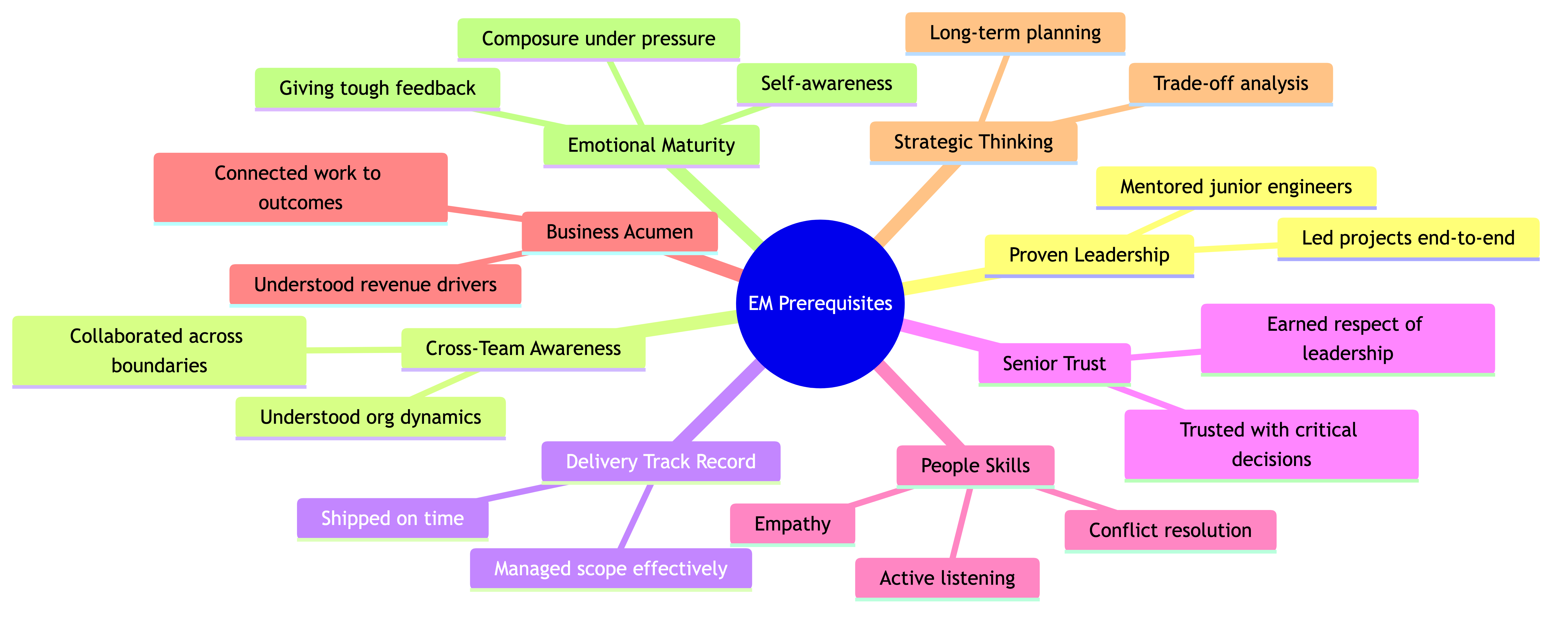
So you want to be an Engineering Manager. Or maybe someone has suggested you'd be good at it. Or maybe you're already a Tech Lead and you're wondering what the next step looks like.
Before we talk about what an EM does, let's talk about what you need to have done — and who you need to be — before you step into the role. Because the single most common mistake orgs make is promoting someone into management before they're ready. And the single most common mistake ambitious engineers make is wanting the title before they've built the foundation.
This guide is about that foundation.
1. Proven Team Leadership
This is the obvious one, but let's be specific about what "proven" means. It doesn't mean you had "Tech Lead" on your LinkedIn for eighteen months. It means you led a team and the evidence is clear.
You delivered projects — not just your part, but the whole thing. You were the person who knew where every workstream stood, who was blocked, what was at risk. When something went sideways, you didn't escalate and wait. You figured out a path forward and brought your manager a recommendation, not a problem.
You grew people. Someone on your team got better because you were their lead. Maybe you paired with a junior engineer and they started owning features independently. Maybe you helped a mid-level engineer step into technical design work they weren't confident about. The point is that your team's capabilities expanded under your leadership, and people would say that out loud if asked.
You handled conflict. Two engineers disagreed about an architecture decision and you didn't just pick a side or avoid it — you facilitated a real conversation, helped them find common ground, and the team moved forward without resentment. Or maybe a stakeholder was pushing for something unrealistic and you pushed back with data and alternatives instead of just absorbing the pressure or passing it down to your team.
The bar here isn't perfection. It's a pattern. Multiple quarters of leading a team where things got better — better delivery, better people, better culture — because you were in the lead seat.
If you can't point to specific examples of each of these, you're not ready yet. And that's fine. Go get those examples.
2. Cross-Team Awareness
Here's where a lot of strong Tech Leads have a blind spot. You might be excellent at leading your team, but do you understand how your team fits into the broader organization?
An EM doesn't just manage a team. They manage a team's relationship with everything around it. That means you need to already have experience working across team boundaries before you step into the role.
What does this look like in practice?
You've resolved cross-team dependencies. Not just flagged them in standup — actually gone to the other team, understood their priorities, negotiated timelines, found creative solutions when your roadmaps conflicted. You've sat in rooms where two teams wanted different things and helped find a path that worked for both.
You understand the broader org's goals. You can explain — without looking it up — what the two or three teams closest to yours are working on and why. You know how your team's work connects to theirs. You've thought about how a decision your team makes might create problems (or opportunities) for another team.
You've navigated cross-team conflict. Maybe another team shipped something that broke your integration. Maybe your team's priorities shifted and it impacted a shared dependency. Whatever it was, you didn't just complain about it — you engaged directly, built a relationship with the other team's lead, and worked through it.
If your world ends at your team's boundaries, you're going to struggle as an EM. Start expanding your awareness now.
3. Consistent Delivery Track Record
This one is straightforward but non-negotiable. You need a track record of shipping. Not one big launch — a pattern of reliable delivery over multiple quarters.
Leadership promotes people into management roles based on trust. And trust comes from consistency. If you've had a great Q3 but a rough Q4 and an okay Q1, that's not a track record. That's variance.
What a consistent delivery track record looks like:
- Multiple quarters where your team hit its commitments (or communicated early and clearly when scope needed to change).
- Projects that were scoped well, executed on time, and didn't require heroics at the end.
- Evidence that you can manage scope, timelines, and trade-offs — not just write code fast.
- A reputation among your peers and leadership as someone who delivers what they say they'll deliver.
This matters because as an EM, delivery is table stakes. It's not the exciting part of the job, but it's the part that lets you keep your job. If you can't deliver reliably as a TL, adding more responsibilities on top isn't going to help.
The good news is that this one is very concrete. Look at the last four to six quarters. Did your team deliver? Did you lead that delivery? Can your manager point to it? If yes, you've got this prerequisite covered.
4. Trust of Senior Leadership
This is the prerequisite nobody talks about openly, but it's often the deciding factor. Your EM and their manager need to trust you enough to hand you a team and say, "This is yours now."
That trust is earned in a lot of small ways over time:
Good judgment. When you make decisions, they tend to be the right ones. Not always — nobody's perfect — but your batting average is high. When you escalate, it's at the right time, with the right framing. When you don't escalate, it's because you genuinely had it handled, and the outcome proves it.
Low drama. Senior leaders are managing a lot of complexity. They don't want to add a new manager to their org who's going to create more work for them. If you're the kind of person who handles things cleanly, communicates proactively, and doesn't generate unnecessary escalations, that builds trust fast.
Alignment. You understand what leadership is trying to achieve, and your work naturally supports it. This doesn't mean being a yes-person — it means you know when to push back and when to align, and you do both well.
Visibility. This is the uncomfortable one. You can be doing all of the above, but if leadership doesn't see it, it doesn't count. Make sure the people who make promotion decisions know what you're doing. Not through self-promotion — through clear communication, well-run projects, and the kind of work that naturally gets noticed.
Here's a simple test: if your skip-level manager were asked, "Could this person own a team end-to-end?" would they say yes without hesitation? If you're not sure, you probably have more work to do — either in building the trust or in making the work visible.
5. People Skills Beyond Your Team
Managing tasks is not managing people. This is where a lot of technically excellent Tech Leads discover their biggest gap.
Before you become an EM, you need to have already done the hard parts of people management, even without the title:
Mentoring. You've invested in someone's growth over months, not just answered their questions. You've helped someone figure out what they want in their career and taken steps to help them get there. You've watched someone struggle with something and made a judgment call about when to step in and when to let them work through it.
Giving real feedback. Not just "nice job on that PR." Real feedback. "I've noticed you tend to go quiet in meetings when there's disagreement, and I think it's hurting your influence. Here's what I'd suggest." The kind of feedback that's uncomfortable to give but genuinely helps someone grow.
Hard conversations. You've told someone their work isn't meeting expectations. You've addressed behavior problems — showing up late, being dismissive in code reviews, not pulling their weight. You didn't avoid it, delegate it to your manager, or wait for a performance review cycle. You had the conversation directly, clearly, and with respect.
Dealing with underperformers. This is the hardest one. You've worked with someone who was struggling and helped them either improve or come to terms with the fact that this role isn't the right fit. You didn't let it fester for months while the rest of the team silently resented it.
If you haven't done these things as a TL, you absolutely must before becoming an EM. Because as an EM, these aren't occasional challenges — they're your core job. And the stakes get higher because you'll be doing them with the authority of a manager, which means your words carry more weight and your mistakes cause more damage.
6. Business Acumen
Here's where a lot of engineers roll their eyes. "I just want to build things. Why do I need to understand the business?"
Because as an EM, you're not just building things. You're deciding what to build, justifying why, and explaining the impact in terms that non-engineers can understand. And if you can't do that, you'll consistently lose prioritization fights to the EM who can.
Business acumen means:
You understand how your team's work connects to revenue, users, or strategic goals. Not vaguely — specifically. "Our team owns the checkout flow. A 100ms improvement in page load time increases conversion by X%, which translates to $Y in annual revenue." That kind of specificity.
You can frame technical work in business terms. "We need to pay down tech debt" is not a compelling argument to a VP. "We're spending 30% of our sprint capacity on incidents caused by this legacy system. Investing two sprints in replacing it would free up roughly one engineer's worth of capacity per quarter" — that's compelling.
You understand trade-offs beyond the technical. Sure, the microservices rewrite is technically superior. But it'll take six months, and the business needs to ship a new feature in three. Can you find a pragmatic middle ground? Can you articulate the risks of both approaches in terms leadership cares about?
You pay attention to what's happening outside engineering. You know what sales is struggling with. You've read the quarterly business review. You understand what the product strategy is and why. You don't need to be an MBA, but you need to be curious about the business you're in.
Start building this muscle now. Sit in on business reviews. Ask your PM to walk you through the product strategy. Read the company's investor materials if they're public. The more fluent you are in business language, the more effective you'll be as an EM.
7. Strategic Thinking
As a TL, you mostly think in sprints. Maybe you plan a quarter ahead for bigger projects. But your default time horizon is "what do we need to ship in the next two weeks?"
As an EM, your time horizon shifts dramatically. You need to be thinking about:
Quarterly planning. What should your team be working on next quarter, and why? How does it connect to org-level goals? What's the right balance between feature work, tech debt, and operational improvements? You need to walk into planning with a point of view, backed by data, and be ready to negotiate scope.
Roadmaps. Where is your team headed over the next two to four quarters? What capabilities are you building? What's the sequence and why? A good roadmap isn't just a list of projects — it tells a story about how your team's work creates compounding value over time.
Long-term technical direction. Where should your architecture be in a year? Two years? What investments now will pay off later? What technical decisions are you making today that you'll either thank yourself for or regret? You don't need to be the one designing the architecture, but you need to be able to evaluate and guide the direction.
People strategy. What skills does your team need in six months that it doesn't have today? Who's ready for a bigger role? Who might leave? What does your hiring plan look like? This is a dimension of strategy that most TLs haven't had to think about at all.
If you find yourself naturally thinking about these things already — bringing up concerns about next quarter's plan, suggesting long-term investments, noticing gaps in the team's skill set — that's a strong signal you're developing the strategic muscle you'll need.
If you don't think about any of this and it sounds exhausting, be honest with yourself about whether the EM role is what you actually want.
8. Emotional Maturity
This is the prerequisite that matters most and gets discussed least.
Engineering management is emotionally demanding in ways that writing code is not. You'll deal with ambiguity constantly — unclear priorities, conflicting stakeholder demands, organizational changes you can't control. You'll deal with conflict — between team members, between teams, between your team and leadership. You'll deal with stress — tight deadlines, high expectations, and the weight of knowing that your decisions affect other people's careers.
Emotional maturity means:
You handle stress without passing it down. When leadership puts pressure on you, your team shouldn't feel it as panic. They should feel it as clarity — clear priorities, realistic expectations, a calm lead who knows what matters.
You manage ambiguity without freezing. You don't always have all the information. You make the best decision you can with what you have, communicate your reasoning, and adjust when you learn more. You're comfortable saying "I don't know yet, but here's how we'll figure it out."
You separate your ego from your decisions. When someone challenges your idea and they're right, you change your mind without resentment. When you make a mistake, you own it publicly and focus on fixing it rather than defending it. You don't need to be the smartest person in the room.
You handle conflict without avoidance or aggression. You don't duck hard conversations and you don't escalate them unnecessarily. You engage directly, listen genuinely, and look for solutions rather than victories.
You regulate your emotions in real time. When a meeting goes sideways, you don't react immediately — you pause, think, and respond. When someone says something frustrating, you address the substance rather than reacting to the tone.
This isn't something you can develop overnight. It's built through experience, self-awareness, and often some hard lessons. If you know this is a growth area for you, start working on it now. Get feedback from people you trust. Pay attention to how you react under stress. Consider working with a coach or mentor who can help you develop in this area.
9. How to Know You're Ready
There's no perfect rubric for readiness, but there are signals. Here are some honest indicators.
Signs You're Ready
- Your manager already treats you like a peer in some conversations. They ask for your input on team decisions, org-level discussions, or hiring.
- Other people on the team naturally come to you for guidance — not just technical questions, but career advice, conflict resolution, and "what should I do about this?" conversations.
- You've handled most of the hard parts of the EM role informally. You've given tough feedback, resolved conflicts, made prioritization calls, and represented your team to stakeholders.
- You're more excited about the team succeeding than about your own technical contributions. When someone on your team ships something great, your first reaction is pride in them, not a wish that you'd been the one to build it.
- You've done a realistic assessment of what you'd be giving up (deep technical work, individual contribution) and you're genuinely okay with it.
- Multiple senior people — not just your manager — would vouch for your readiness.
Signs You Need More Time
- You haven't led a team through a genuinely hard situation yet. Everything has gone relatively smoothly and you haven't been tested.
- You avoid difficult people conversations. You know you should give someone feedback but you keep putting it off.
- You're drawn to the title or the authority more than the actual work. Be honest with yourself about this one.
- You're not sure how your team's work connects to the broader org or business. Your world is still mostly your team's codebase.
- You still think of leadership as "them" rather than "us." If you see senior leadership decisions as things that happen to you rather than things you'd participate in, you're not thinking like a manager yet.
- Your delivery track record is inconsistent. You've had some great quarters and some rough ones, and you're not sure why.
- You haven't built relationships outside your team. You don't know the other team leads well. You haven't worked cross-functionally.
There's no shame in any of these. They're just information. Use them to figure out what to work on next, not to beat yourself up.
10. The EM Role is Different from TL
This might be the most important section, because the number one misconception about becoming an EM is that it's "TL plus a few extra responsibilities." It's not. It's a fundamentally different job.
What Changes
Your relationship to code changes. As a TL, you're still in the code. Maybe you're not writing as much as your ICs, but you're reviewing PRs, making architectural decisions, maybe owning a critical subsystem. As an EM, your relationship to code becomes almost entirely indirect. You might review a design doc. You might ask questions about an architectural decision. But you're not going to be in the codebase day-to-day, and if you try to be, you'll do both jobs poorly.
Your relationship to people changes. As a TL, you lead people. As an EM, you manage them. That's a meaningful difference. You'll own performance reviews, compensation discussions, promotion cases, and — if it comes to it — performance improvement plans and terminations. These carry real weight. Your words in a 1:1 are no longer peer feedback — they're manager feedback, and people hear them differently.
Your relationship to the organization changes. As a TL, you're mostly focused on your team with some cross-team work. As an EM, you're part of the management layer. You'll be in rooms where organizational decisions are made. You'll have context your team doesn't have. You'll sometimes need to support decisions you didn't agree with. You'll be responsible for communicating changes to your team in a way that's honest but doesn't undermine leadership.
How you're evaluated changes. Nobody is going to look at your commit history or your system design skills. You'll be evaluated on your team's output, your team's health (retention, engagement, growth), your ability to execute on the roadmap, and your effectiveness as a partner to product and other functions.
What Stays the Same
Your technical background still matters. You need it to earn your team's respect, to evaluate technical decisions, to sniff out problems early, and to hire well. You just won't be using it the same way.
Your leadership skills transfer directly. Everything you learned as a TL about communication, prioritization, and driving outcomes — all of that applies. The scope just gets bigger and the tools change.
The Honest Question
Ask yourself: "If I could never write production code again, would I still want this job?"
If the answer is an immediate and honest yes, you might be ready. If you hesitated, that's worth examining. Because the EM path leads further from code over time, not closer to it. And that's okay — but only if it's genuinely what you want.
Business Value
Let's talk about why all of these prerequisites matter — not just for the individual, but for the organization.
The Cost of Promoting Too Early
When someone becomes an EM before they're ready, the costs are real and measurable:
- Team attrition. A new EM who can't handle people challenges loses good engineers. Replacing a senior engineer costs 6 to 12 months of salary in recruiting, onboarding, and lost productivity. Lose two or three, and the cost is staggering.
- Delivery slowdown. An unprepared EM doesn't know how to manage scope, communicate effectively with stakeholders, or unblock their team at the organizational level. Projects slip. Deadlines get missed. Trust erodes.
- Cultural damage. A manager who avoids hard conversations lets problems fester. A manager who doesn't know how to give feedback creates confusion about expectations. A manager who can't handle conflict creates a team where people walk on eggshells or quietly disengage. This stuff is hard to measure but incredibly expensive.
- The EM themselves. This is the part people forget. Putting someone in a role they're not ready for doesn't just hurt the team — it hurts them. They struggle, they lose confidence, and in some cases they leave the company entirely. You've lost a great TL and gained a struggling EM. That's a bad trade.
A reasonable estimate: a premature EM promotion can cost an organization $500K or more over 12 to 18 months when you factor in attrition, delivery impact, and the cost of course-correcting.
The Value of a Well-Prepared EM
On the other hand, when someone steps into the EM role with a strong foundation, the value compounds:
- Team retention improves. People stay for good managers. A strong EM who can develop people, give clear feedback, and create a healthy team culture is the single biggest lever for retention.
- Delivery accelerates. A well-prepared EM knows how to plan, prioritize, unblock, and communicate. Their team ships more, with less churn and fewer surprises.
- The team grows. A good EM develops their people. Engineers get promoted, take on bigger scope, and eventually become leads and managers themselves. The organizational capacity grows.
- Cross-functional partnerships strengthen. An EM with business acumen and cross-team awareness builds strong relationships with product, design, and other engineering teams. This reduces friction and increases velocity across the org.
Measurable Readiness Indicators
If you want to evaluate readiness more concretely, here are indicators you can actually measure or assess:
| Indicator | How to Assess |
|---|---|
| Delivery consistency | Look at the last 4-6 quarters. Did the team meet commitments reliably? |
| People development | Has at least one person on the team been promoted or taken on significantly bigger scope under this person's leadership? |
| Conflict resolution | Can you point to 2-3 specific examples of conflicts they resolved effectively? |
| Cross-team effectiveness | Have other team leads or EMs given positive feedback about working with this person? |
| Stakeholder management | Can they present to senior leadership clearly and handle tough questions? |
| Business framing | Can they explain their team's work in terms of business impact, not just technical output? |
| Feedback quality | Do their reports say they get useful, actionable feedback? |
| Emotional regulation | How do they respond when things go wrong? Ask their peers and reports. |
| Strategic thinking | Have they proactively identified opportunities or risks that others missed? |
| Skip-level trust | Would their skip-level manager confidently hand them a team? |
Use these as a conversation tool, not a checklist. No one will be strong on every single dimension. The question is whether the foundation is solid enough to build on — and whether the gaps are ones that can be closed quickly with support, or fundamental areas that need more time.
Final Thought
The best Engineering Managers I've worked with didn't rush into the role. They built a foundation as a Tech Lead that was so strong that the transition to EM felt natural — to them and to everyone around them. When they got the title, it was a recognition of what they were already doing, not a leap into the unknown.
That's what you're aiming for. Not a promotion. A recognition.
Take the time to build the foundation. Your future team will thank you for it.
Common Pitfalls
- Rushing into the role for the title. Wanting "Engineering Manager" on your LinkedIn before you have built the foundation leads to struggling in the role, losing confidence, and potentially damaging your career trajectory. The title is not the goal — the capability is.
- Confusing technical excellence with management readiness. Being the best coder on the team does not mean you are ready to manage people. Management requires a fundamentally different skill set, and assuming technical skill translates directly leads to neglecting the people, communication, and strategic dimensions of the role.
- Avoiding difficult people conversations as a Tech Lead. If you have never given hard feedback, addressed underperformance, or navigated interpersonal conflict before becoming an EM, you will be doing it for the first time with the authority of a manager — where mistakes carry significantly more weight.
- Neglecting cross-team relationships. Focusing exclusively on your own team without building awareness of the broader organization means you will struggle as an EM to navigate dependencies, align with other teams, and represent your team effectively in cross-functional settings.
- Underestimating the emotional demands of the role. Many aspiring EMs do not prepare for the sustained emotional labor of managing ambiguity, absorbing pressure from leadership, and supporting people through difficult situations. Without emotional maturity, stress gets passed down to the team.
- Skipping the business acumen prerequisite. Engineers who cannot frame their work in business terms will consistently lose prioritization fights, fail to secure resources, and struggle to earn the trust of senior leadership once they step into management.
Key Takeaways
- The transition from Tech Lead to Engineering Manager is a career change, not a promotion. It requires a fundamentally different set of skills and a willingness to step away from daily technical work.
- Proven team leadership means a pattern of delivery, people growth, and conflict resolution over multiple quarters — not just a title on your resume.
- Cross-team awareness and business acumen are prerequisites that most Tech Leads underinvest in but that define an EM's effectiveness.
- Trust from senior leadership is earned through good judgment, low drama, alignment, and visibility. If decision-makers do not know what you are doing, it does not count.
- Emotional maturity is the most important and least discussed prerequisite. The ability to handle stress, ambiguity, and conflict without passing it down to your team is non-negotiable.
- Strategic thinking — planning quarters ahead, building roadmaps, and developing a people strategy — separates EMs from Tech Leads more than any other skill.
- Readiness should feel like recognition of what you are already doing, not a leap into the unknown. If the promotion surprises people, it is probably too early.
- Premature promotion into management hurts the individual, the team, and the organization. Taking the time to build the foundation is always worth it.